
Full-Time Work Challenges
Back in 2022, work had picked up significantly as patients began having confidence in medical treatments after the disturbance of the 2020 pandemic. We juggled multiple patient cases across home health agencies, working long hours and enduring long drives between appointments. Due to the increased workload, asking for extended although unpaid time off to travel also became increasingly difficult. What added to our disappointment was the shock of a large tax bill despite weeks of not working in the year. While we appreciate our roles as home health physical therapists and our commitment to patient care was still unwavering, there were times when we thought of looking for a better work situation.
Out of curiosity, we began speaking to travel physical therapy recruiters. Initially, these conversations were purely for information-gathering purposes. We were curious about the world of travel physical therapy and its potential to address the pain points we were experiencing in our current setting, but we had no plans of leaving the Sunshine State just yet.


As we delved deeper into these discussions, we uncovered the concept of guaranteed pay during travel assignments, tax-free stipends, and the option to take breaks for weeks on end. The more we learned, the more travel physical therapy seemed like a potential solution to many of our work-related challenges.
In this blog post, we wish to provide an in-depth understanding of the decisions that led us to become travel physical therapists and the preparations we made before venturing into the world of travel physical therapy. I’ll also outline the realities we encountered during our first assignment, offering insights that may help you determine if this career path aligns with your goals.
Spark of Travel PT Fire
The attraction to travel physical therapy can be traced back to our love of learning languages, exploring places, and experiencing cultures. Just as the world began to relax its travel restrictions following the pandemic, we seized the opportunity to explore countries like Mexico, Costa Rica, and Peru for extended periods—four weeks at a time! These experiences allowed us to immerse ourselves in the local culture, far beyond the passing encounters of a weekend getaway. These adventures planted the seed to combine our love for travel with our careers as physical therapists.



Travel physical therapy aligned perfectly not only with our love of travel but also with our financial independence goals. We envisioned the ability to save more, thanks to the flexibility to choose from different pay packages offered by various facilities. The prospect of working a 13-week contract, maxing out our retirement funds at a fraction of the time, and then enjoying in-between breaks to travel before the next assignment was an appealing lifestyle shift. It was a freedom we yearned for—a contrast to our full-time roles, where we had to work double with limited time off.
The Research
I figured that becoming a travel clinician is not always rainbows and butterflies, so before embarking on our journey as travel physical therapists, we consulted with friends who had experience in this field to gain valuable insights into their positive experiences and the challenges they faced. These conversations offered a balanced perspective, highlighting the profession’s rewarding and demanding aspects.
We also returned to discussions with recruiters from various agencies specializing in travel therapy. This time, we were equipped with specific questions about travel assignments, including state-specific licensing requirements, pay package structures, and the benefits associated with travel therapy, such as moving reimbursements, medical coverage, eligibility to participate in retirement accounts, and more.
Travel Therapy Pay Package and Perks
Before accepting the assignment, one of our initial steps was to create a spreadsheet that compared the take-home pay between our full-time job and prospective travel therapy assignment (See Below). Since we will move hundreds of miles away, the goal was to significantly increase our savings and retirement account contributions while keeping two households. We still plan to continue house-hacking our primary residence to offset upkeep costs and have eyes on the property during our absence. With the proposed assignment’s generous pay package, the move seemed financially feasible on paper.
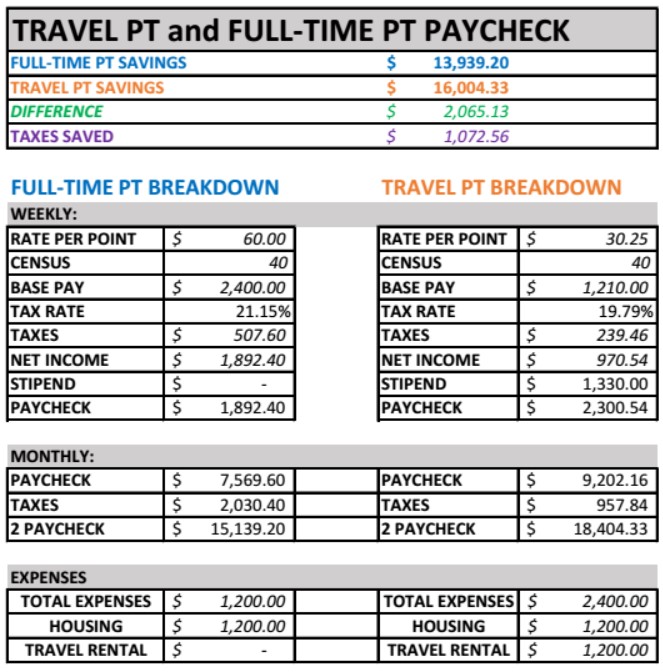
Understanding the intricacies of salaries in travel physical therapy was a crucial next step in knowing if it could also address our tax issues. Travel pay packages consist of two components: base pay (hourly rate) and stipends, which cover housing, meals, and incidentals. These two elements are taxed differently. Base pay is subject to regular income tax, while stipends are tax-free. This is because your living expenses are duplicated when accepting an assignment away from home. The pay package arrangement allows for potential tax savings of up to half of your paycheck.
However, it’s essential to establish a tax home, your place of residence where you pay bills while away on assignments, to qualify for tax-free stipends. Failing to maintain a tax home beyond a reasonable commuting distance or working in only one facility for more than 12 consecutive months may result in stipends being taxed as regular income. Admittedly, navigating these tax nuances can be confusing. There are tons of opinions out there on how it is supposed to be. For personalized guidance, please consult your agency and tax professionals.


Once we confirmed that the move would address our work challenges, we worked with a travel recruiter to get the ball rolling. Choosing a travel recruiter available at reasonable times is crucial to answering questions and addressing concerns, especially for those new to the field. Before signing contracts, we meticulously reviewed them to ensure that all expectations during the assignment (guaranteed pay, required hours/number of visits, time off days), promised benefits (medical insurance, eligibility in the 401k plan, free CEUs), and reimbursements (licensure, moving, mileage, physical exams, and uniform expenses) were clearly stated.
Relaxed Patient Workload
Upon receiving our licenses and fulfilling other requirements, like physical exams and background checks, we sailed our maiden voyage in the world of travel therapy to Albuquerque, New Mexico, the “Land of Enchantment. “


Expecting a challenging workload and long patient commutes, we were pleasantly surprised by the warm welcome we received. The office and field staff embraced us from day one, demonstrating a commitment to teamwork and a genuine desire to enhance the lives of our patients. Rather than being overwhelmed with excessive patient loads or micromanaged schedules, we found ourselves in an environment that struck the right balance, offering guidance on policies and documentation procedures while allowing professional autonomy.
Savings on Taxes
Our spreadsheet also calculated how much we could save on taxes with the generous tax-free stipend. When we worked full-time across different agencies, it was challenging to predict what we would owe come tax season. We scrambled to find extra money to pay what we owed. During our travel physical therapy assignment, predicting taxes was significantly more manageable because there were fewer paychecks to keep track of. The tax-free stipends and our aggressive contribution to the company-sponsored 401(k) had reduced our taxable income, hence our taxes overall.
Work-Life Balance and Travel
Exploring our new “home” away from home became an unexpected delight. Albuquerque offers many things to keep you moving, like hiking trails, outdoor adventures, colorful boutiques in Old Town, weekend farmer’s markets, and the renowned International Balloon Fiesta. Each neighborhood has its distinct charm, with lush parks, food trucks, restaurants, and exhibitions waiting to be discovered. We indulged in the flavors of New Mexico, savoring dishes showcasing the famous red and green chile.


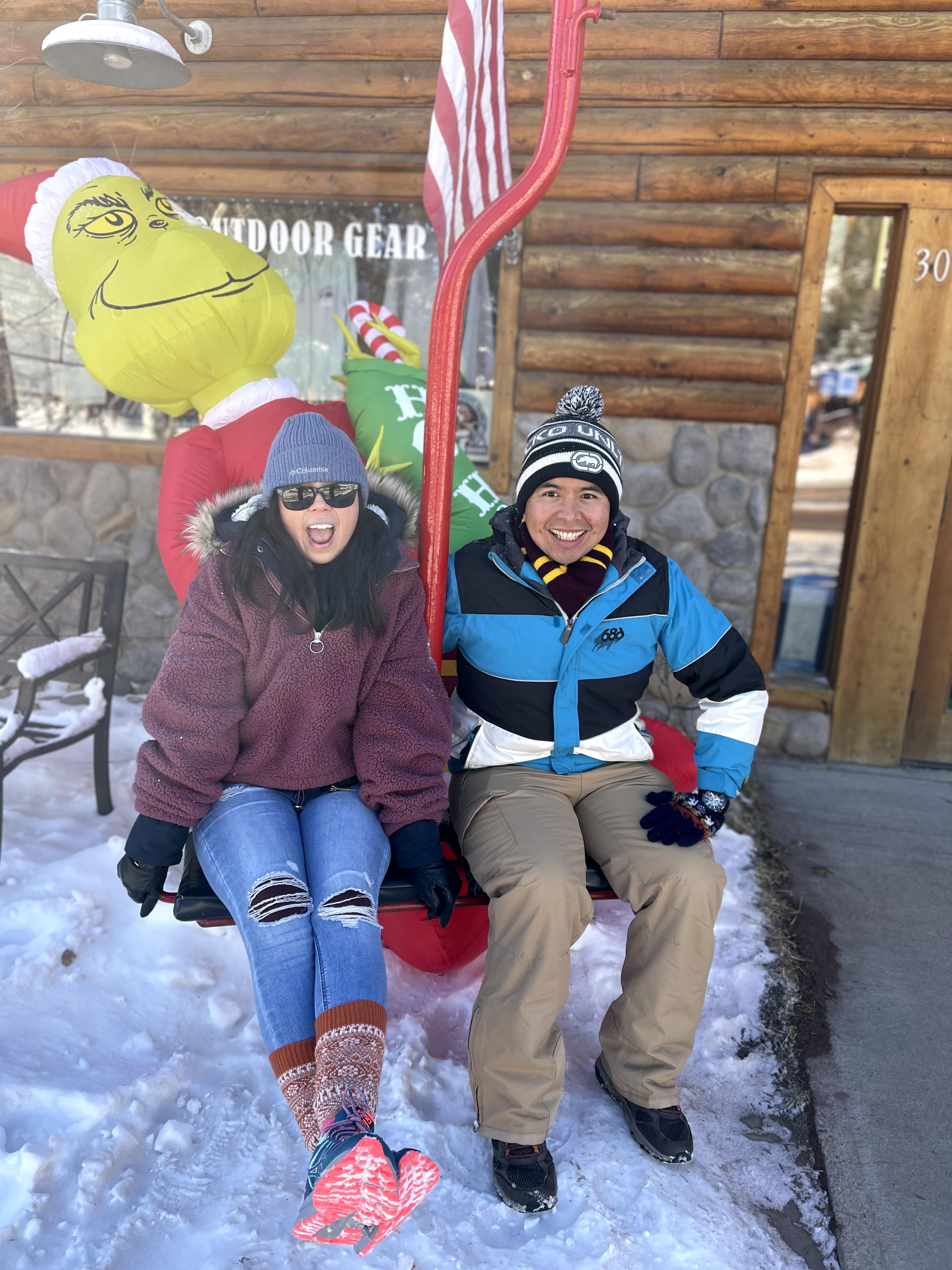


Balancing work and leisure during the assignment proved surprisingly feasible. The manageable workload allowed us to explore New Mexico after work or on the weekends. We even found time for personal projects like learning languages, backyard gardening, and volunteering for causes we care for. Scheduled time off before starting new contracts made enjoying a month’s trip with family during the holidays, cruises in the Caribbean in the spring, and a 6-week trip in Asia in the summer possible.
Are you considering a career in travel therapy or have questions about our experiences? We welcome your feedback and questions! While we are relatively new to travel therapy, we value your perspectives and are eager to learn in any way we can. If you find yourself on the fence, contemplating this unconventional path, please feel free to reach out with your questions, and we will do our best to provide valuable insights and guidance. See you on the road!


DISCLAIMER
We are NOT certified financial advisors, analysts, or CPAs. Investing strategies shared in this article and the website are not financial advice but our opinions for educational purposes only. We want you to treat our content as a preview to do your research so you can make intelligent financial decisions.
 TheraFIRE