
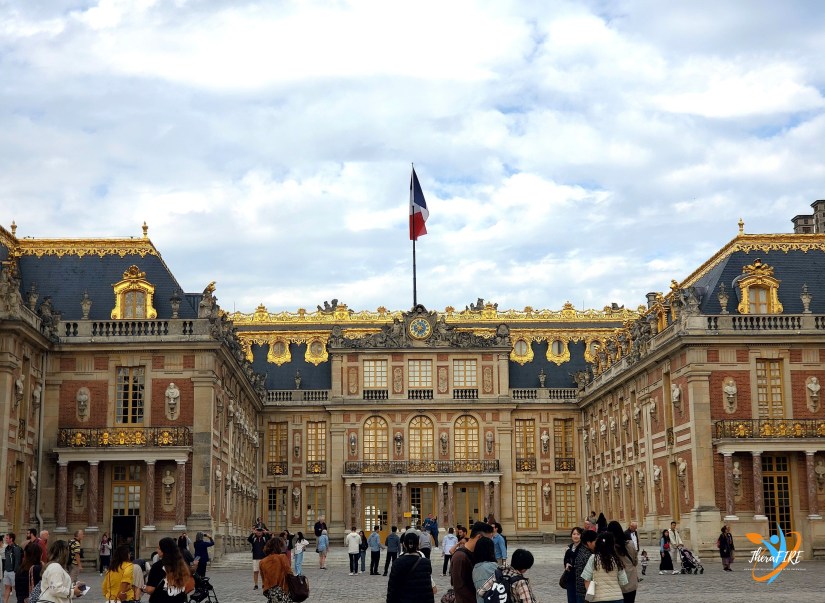
Stepping through the gilded gates of the Palace of Versailles is like stepping back in time. This iconic palace is a sprawling masterpiece. It boasts over 700 rooms and gardens that stretch for almost 2,000 acres. It whispers tales of extravagance, power, and a bygone era of opulence. Join us as we relive our day exploring this legendary estate’s seemingly endless halls, manicured gardens, and hidden corners.
Getting There
We hopped on the RER C train line to reach Versailles from Paris in about 40 minutes. The train stops right at the Versailles Chateau – Rive Gauche station. From there, it’s just a short 10-minute walk to the palace.
Because we were in Paris for over five days, we bought the Navigo Pass Zone 1-5. It only set us back €30.75 for the entire week! It gave us unlimited metro rides and even covered our train fare to Versailles. You can find the most up-to-date pricing and information on the official Île-de-France Mobilités website. Otherwise, you can easily buy tickets to Versailles at the Metro station.
Choosing Your Versailles Adventure
Before you even think about hopping on the train to Versailles, let’s talk about tickets. Knowing your options can save you time, money, and potential disappointment. You can buy your tickets directly from the official Palace of Versailles website.
The Passport and Palace tickets have timed entry, so book your preferred time slot online. Students, people with disabilities, and EU citizens aged 18-25 can get tickets at a reduced price. And here’s a bonus: everyone gets in for free on the first Sunday of every month from November to March!
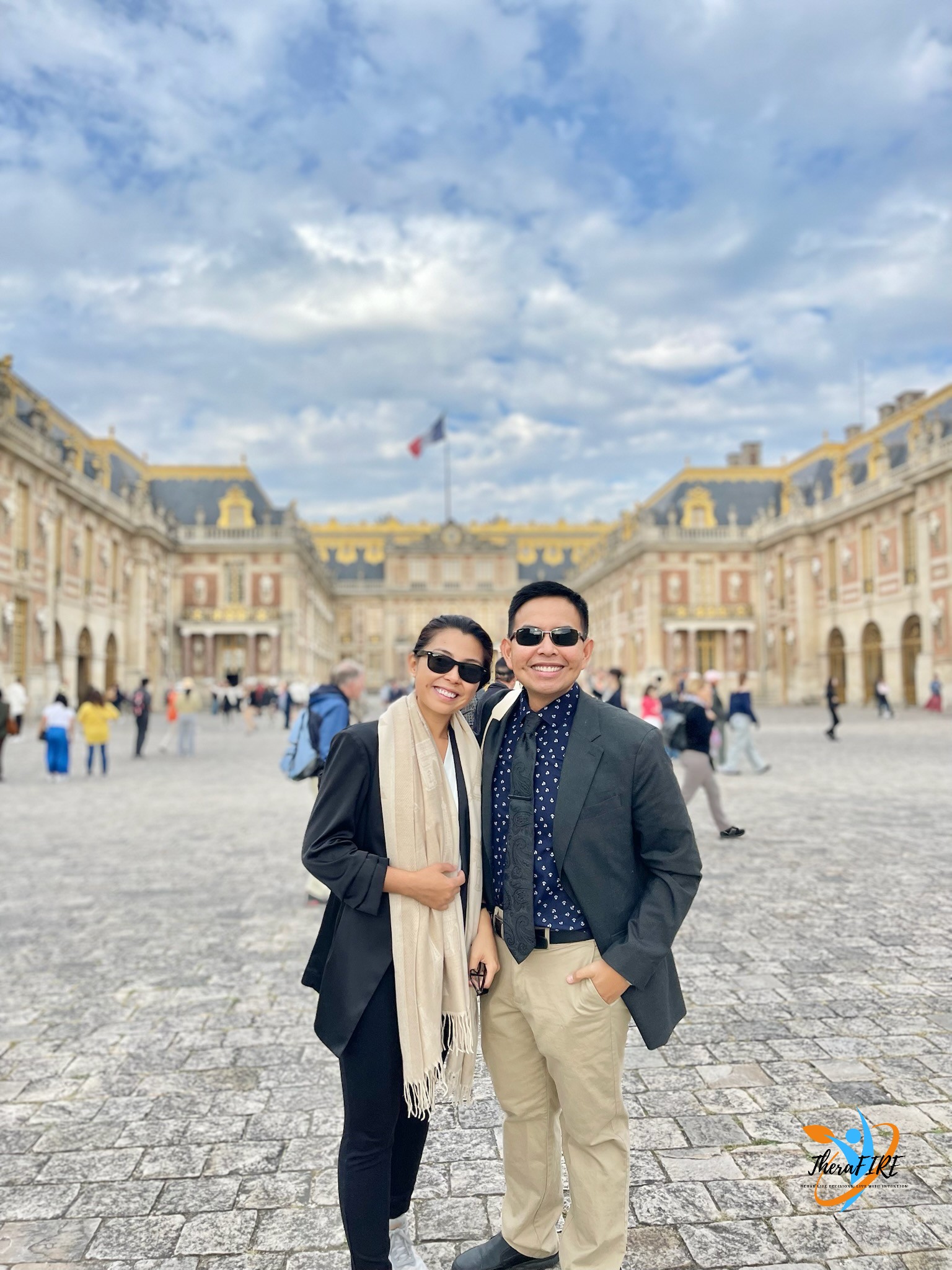
Booking online is highly recommended, regardless of the ticket you choose. This is especially important during peak season. It helps avoid long lines and ensures you get the ticket you want. We had read scary reviews about needing “skip-the-line” tickets, but you don’t need it. We arrived at our 10:30 am entry slot and queued at the indicated spot. We were inside the palace gates within minutes, ready for our royal adventure!
The Palace: A Glimpse into Royal Life
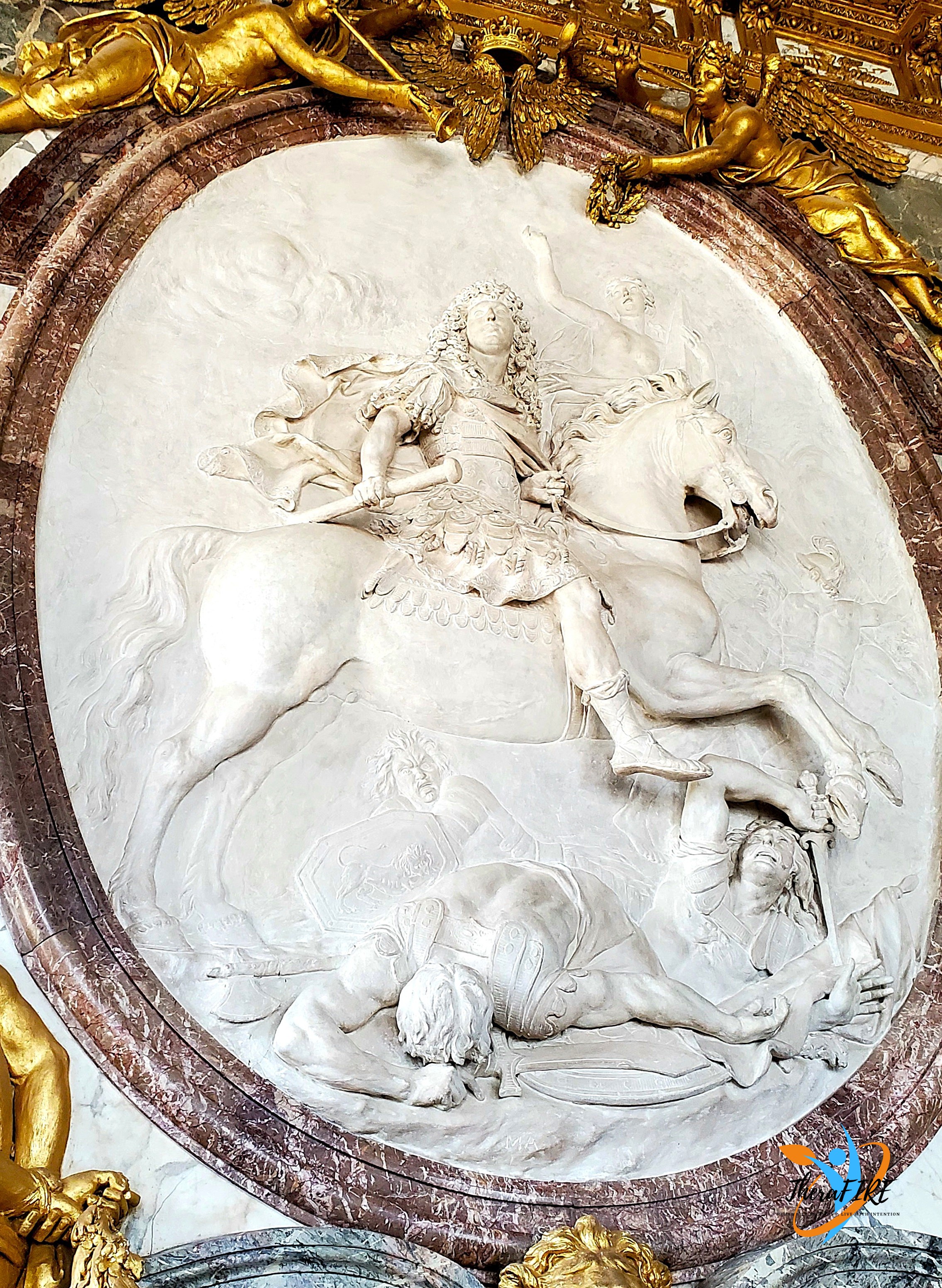
As we approached the palace, we saw the imposing equestrian statue of Louis XIV. It stands proudly in the Place d ‘Armes. It’s a powerful reminder of the Sun King’s legacy. The grandeur of Versailles instills in us a deep sense of reverence for the history that unfolded within these walls.
We recommend downloading the free Versailles app and bringing a set of earphones before your visit. This interactive audio guide brings every corner of the Chateau Versailles, from the palace to the gardens, to life. It provides detailed information about each room, historical context, and interesting facts. You type in the number indicated in each room or corridor, and voilà —instant history lesson!
The Hercules Room was among the first rooms we encountered. It features a massive painting of the Apotheosis of Hercules by François Lemoyne. It sets the stage for the grandeur to come. In the Room of Abundance, the kings of France once displayed all their precious treasures and gifts. The marble walls, gilded bronze, and paintings depict scenes of abundance. They give you a sense of the wealth and power of the French monarchy.
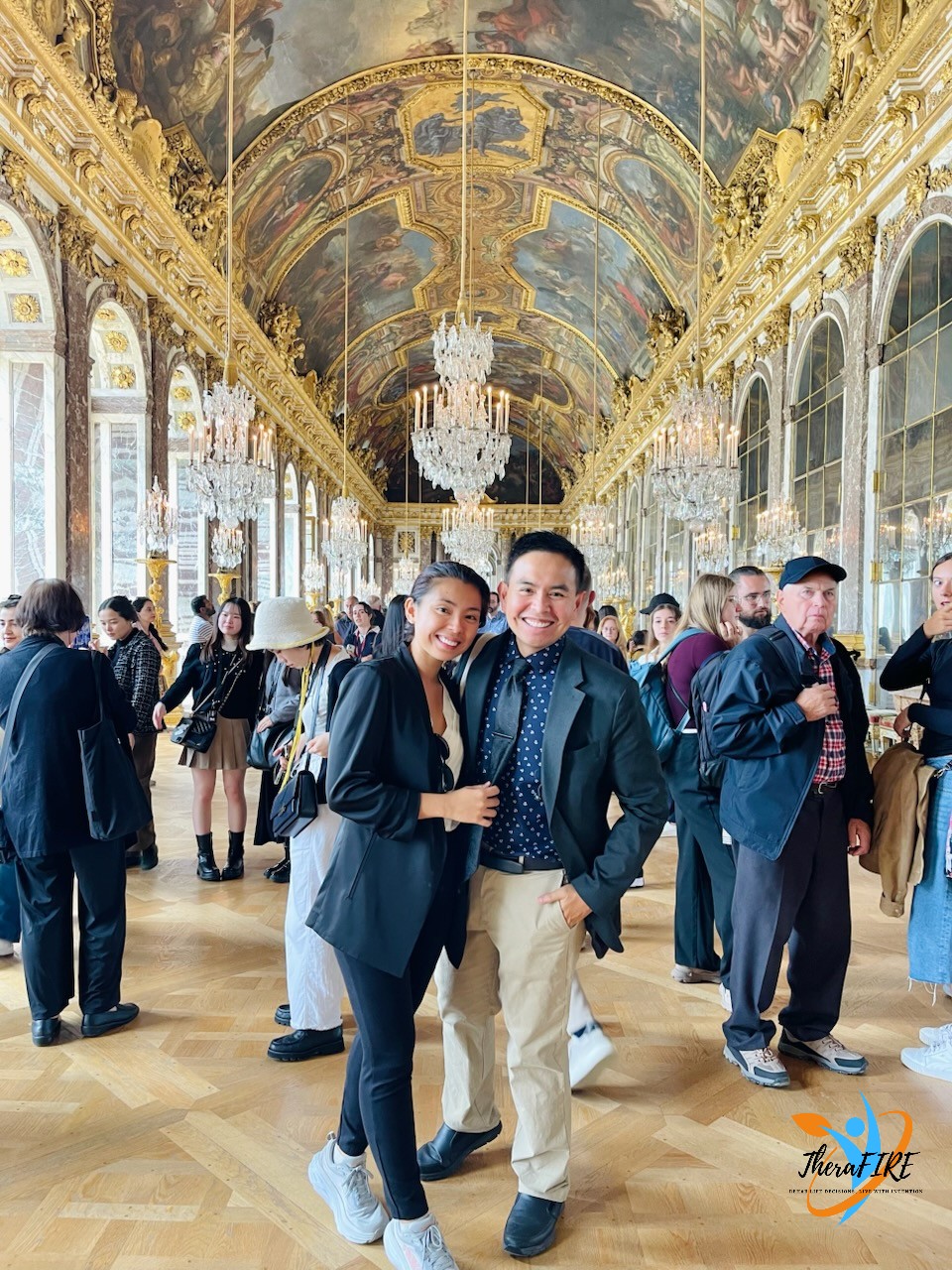
A few rooms passed, and we were swept into the dazzling Hall of Mirrors. This iconic hall is genuinely breathtaking. It’s hard to imagine a more opulent space. It is 239 feet in length with soaring ceilings. 357 mirrors are reflecting the sunlight streaming through the 17 arched windows. It creates a dazzling illusion of endless space and light. This was where courtiers would gather and wait for a glimpse of the king. It’s also where they held grand balls and ceremonies. The Treaty of Versailles was signed here in 1919. This event officially ended World War I.
From there, we moved into the War Room. The room was a stark contrast with its powerful paintings by Le Brun. These works commemorate French military victories and remind us that life at Versailles wasn’t all about parties and fancy clothes. The Apollo Room, originally Louis XIV’s throne room, was next. It’s bathed in sunlight and filled with references to the Sun God, Apollo. The room is a fitting tribute to the self-proclaimed “Sun King.”

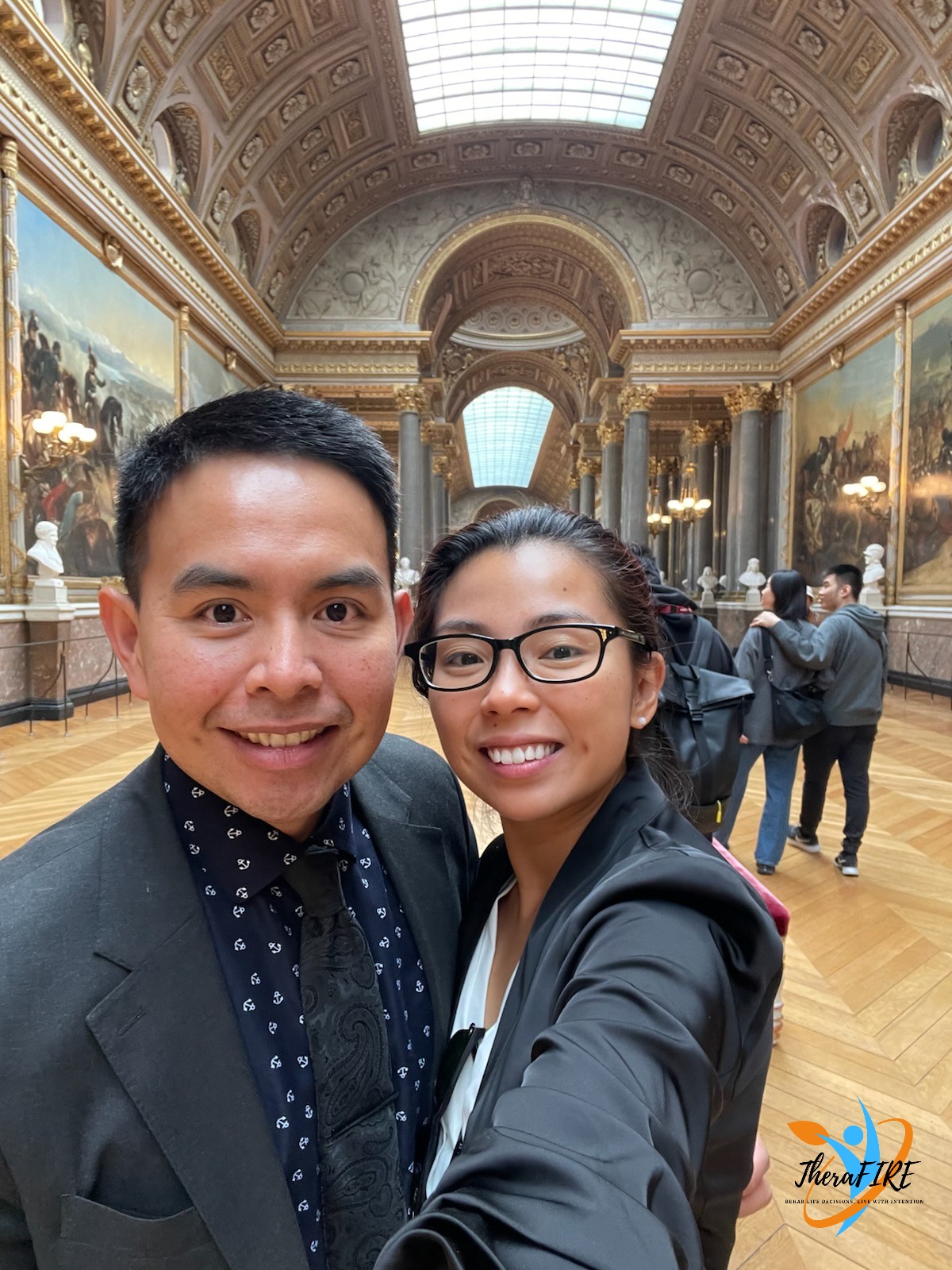
We also passed through the Rooms of Venus, Diana, and Mercury. Each room is dedicated to a different god or goddess. They are decorated with corresponding mythological scenes. We were fascinated by how Louis XIV used art and architecture. He elevated his status and connected himself with the divine.
Of course, we couldn’t miss the chance to peek into the royal bedrooms. The King’s Bedchamber was like something out of a movie. It had a grand bed adorned with ostrich feathers. Those rich tapestries added to the grandeur. Incredibly, this wasn’t just a private space for the king but a stage for elaborate daily rituals. The Queen’s Bedchamber, located just across from the King’s, was equally impressive, with its elegant decor and beautiful tapestries.
Versailles Gardens: A Royal Playground
By lunchtime, we had finished exploring the palace and were ready for fresh air. The palace has a few cafes and restaurants, but we packed sandwiches the night before. We looked for a spot with garden views to enjoy a quick bite.
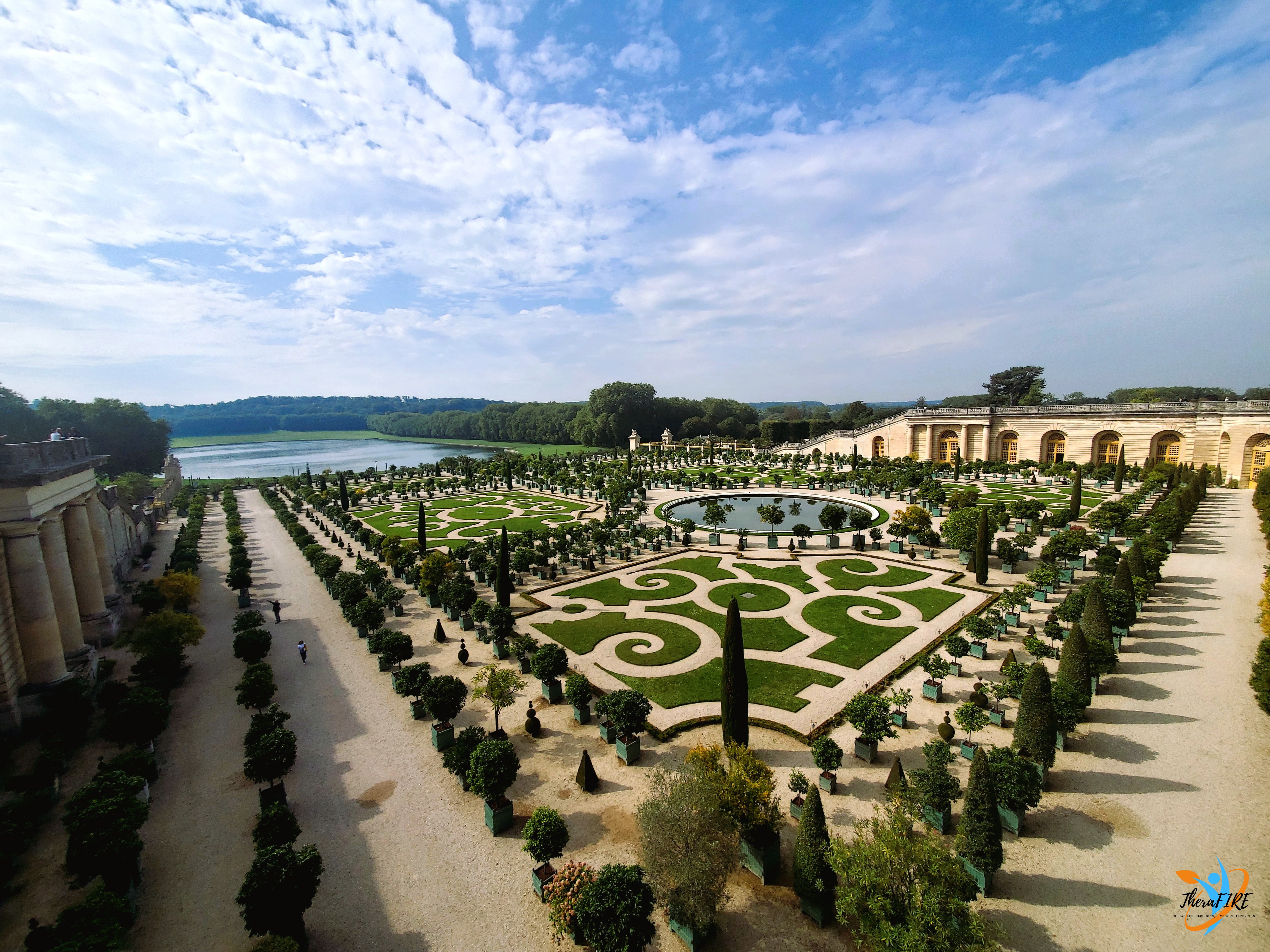
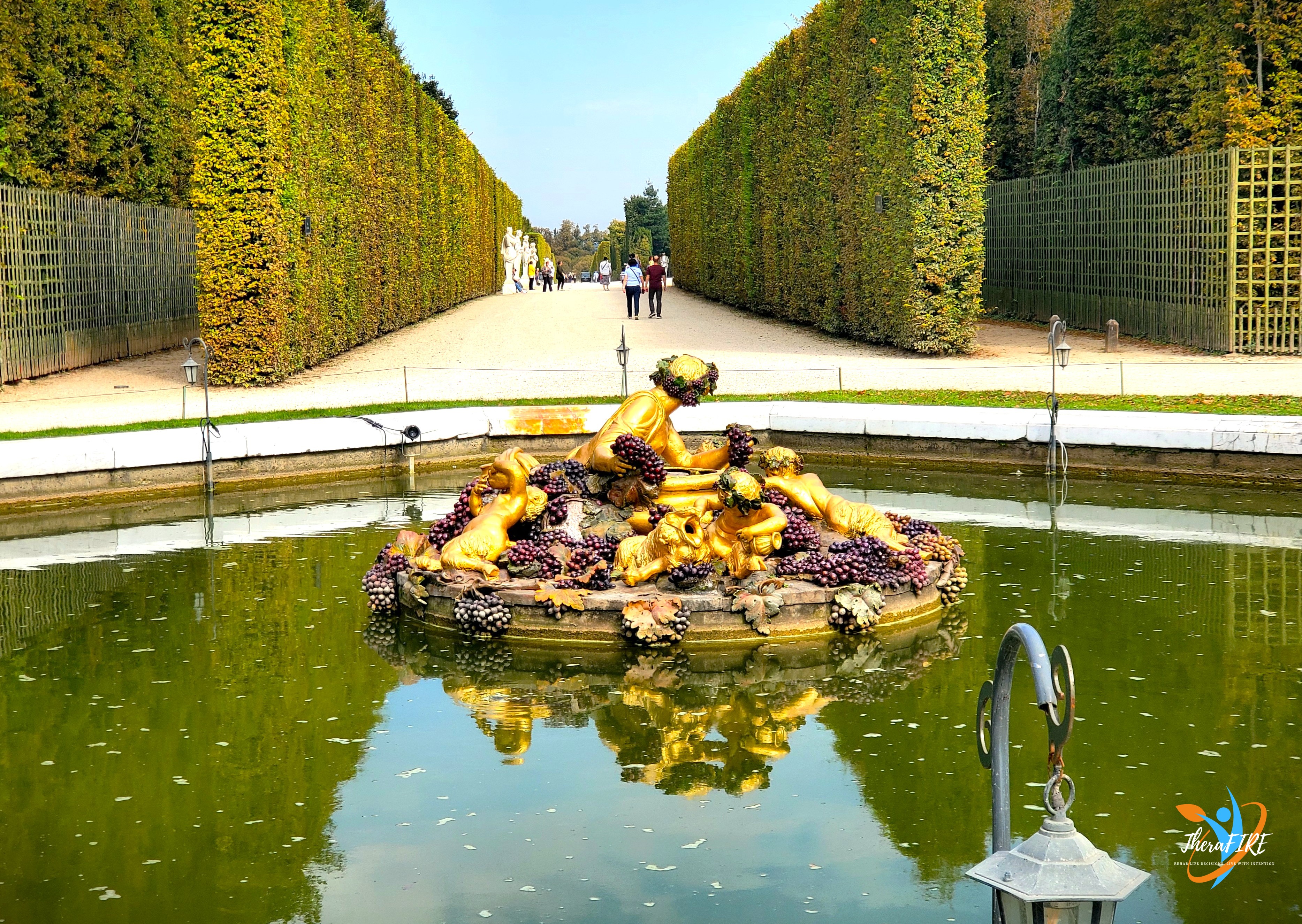

Be warned: exploring the gardens requires a ton of walking! If you’re not up for that, there are a couple of options to give your feet a break. You can hop on the Petit Train for €8.50. It is a cute little train that chugs along a set route through the gardens. The train makes stops at key points of interest. Or, for more flexibility, you can rent a golf cart for €42 for the first hour (and €10.50 for every 15 minutes after that). Each cart fits up to 4 people. It is a good choice for families or those who want to conserve energy. Still, we decided to get our steps on. The Versailles app has a handy guide that helps us navigate the maze-like paths and discover hidden corners.
Stepping out of the palace and into the gardens, we were greeted by the grandeur of the Water Parterre. It’s like a grand garden entrance, with two enormous reflecting pools that mirror the palace facade and the sky. The still water creates a sense of peace. The surrounding hedges and gravel walkways add a touch of formality. From here, you can appreciate the gardens’ scale and design. The Grande Perspective stretches out like a green carpet, leading to the horizon. It perfectly transitions from the palace’s architectural world to the gardens’ natural beauty.

As we strolled, we encountered the playful Bassin des Enfants Dorés (Fountain with Golden Frogs). Then, we were captivated by the Latona Fountain. It depicts the myth of Latona, the mother of Apollo and Diana. She was exhausted and thirsty. Along with Jupiter’s twins, she stopped at a pond in Lycia to drink. The local peasants refused to let her drink. In anger, she called upon Jupiter for help, and he transformed the cruel peasants into frogs! The fountain captures this moment. Latona and her children are surrounded by figures in various stages of transformation. These figures change from humans to frogs.

For a quieter escape, head to the Queen’s Grove. This secluded area was explicitly designed for Marie Antoinette as a place of peace and tranquility. It features a charming pavilion, a small lake, and lush greenery, offering a glimpse into the queen’s taste.
The Grove of the Domes is another area we like. It is a private area with statues of Apollo. You can also find other gods and goddesses there. It’s a peaceful oasis within bustling gardens. Don’t miss the Water Theatre Grove, where you can witness a spectacular water show choreographed to music. It’s a truly magical experience!
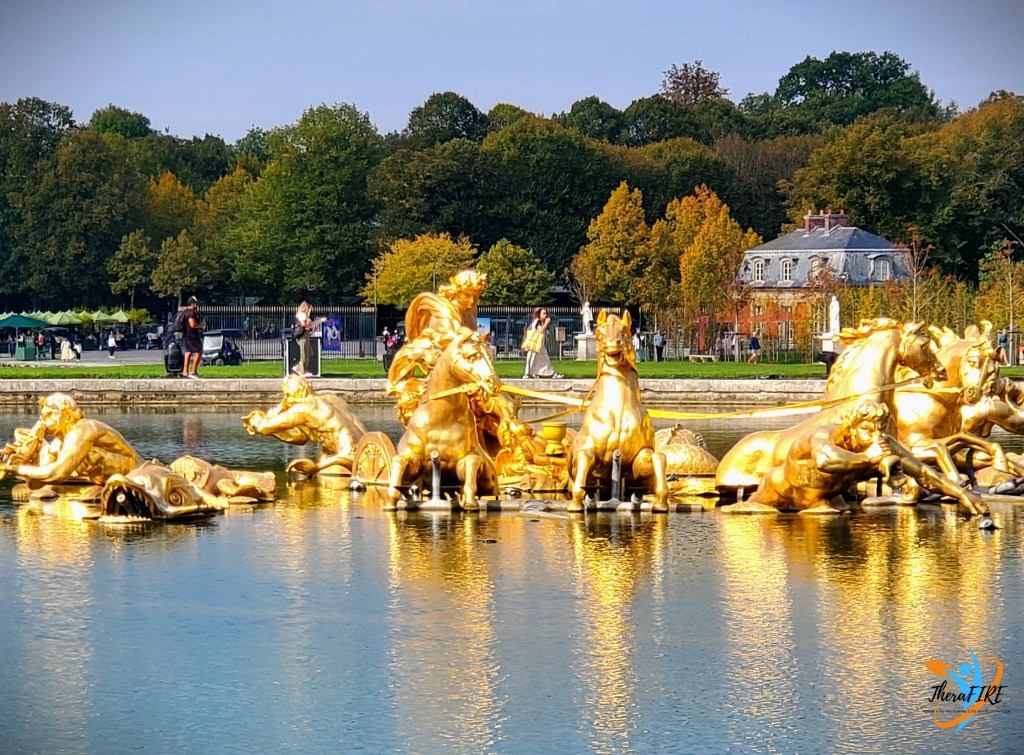
Further down the Grande Perspective, you can’t miss the magnificent Fountain of Apollo. It is a masterpiece of Baroque sculpture and a symphony of water and stone. This sight takes your breath away. Apollo, the god of the sun, rises majestically from the water in his chariot, drawn by four mighty steeds. Their bronze muscles strain. Their manes and tails flow in the wind. The water cascades around them. This creates a sense of unstoppable power. Tritons blow their conch shells. They herald the arrival of the Sun God. Golden rays of sunlight seem to dance around him. It’s a scene that embodies the essence of the Sun King, Louis XIV, and his reign.
The Trianon Estates: The Grand Trianon
After conquering the gardens, we set our sights on the Trianon Estates. We opted for a more secluded path that wound through a wooded area. The shade from the tall trees was a welcome relief, and we enjoyed the peaceful atmosphere as we strolled along, imagining French royalty taking the same route centuries ago.

The Grand Trianon’s elegant pink marble façade and symmetrical design is a beautiful example of French architecture with Italian influences. It exudes a sense of intimacy and light, a welcome contrast to the grandeur of the main palace. But the Grand Trianon was more than just a pretty face. Louis XIV originally built it as a retreat from the pressures of court life, a place where he could relax and entertain close friends away from the prying eyes of the court. Over the years, it has also been used to host foreign dignitaries, serve as a diplomatic residence, and even as a place for Napoleon to work and entertain. It’s fascinating to think about all the different roles this palace has played throughout history.
We were immediately drawn to the Peristyle, the central gallery that connects the palace’s two wings. This walkway, with its marble floors and views of the gardens, is a truly stunning space. We could almost imagine the rustle of silk gowns and the chatter of courtiers as we strolled through this light-filled hallway. We were captivated by the Cotelle Gallery, with its beautiful paintings depicting the gardens of Versailles.


We used the Versailles app again for our audio tour of the Trianon, which was super convenient. Although we were allowed to take photos inside the Grand Trianon, video recording was not allowed.
From there, we walked on a paved road beside trees towards the Petite Trianon. We sat on benches under the trees for snacks and refreshments before walking for about 10 minutes to the charming little palace that was a favorite of Marie Antoinette.
Petit Trianon and the Queen’s Hamlet
Petit Trianon is like stepping into a fairytale. This charming little palace, a neoclassical gem, was a gift from Louis XVI to Marie Antoinette. It became her sanctuary, where she could escape the rigid etiquette and pressures of court life at Versailles. Imagine the freedom she must have felt here, away from the main palace’s constant scrutiny and endless ceremonies. At the Petit Trianon, she could relax, entertain close friends, and indulge her tastes. Marie Antoinette redecorated the interiors and transformed the gardens to reflect her more relaxed and informal style, starkly contrasting the grandeur of the main palace.

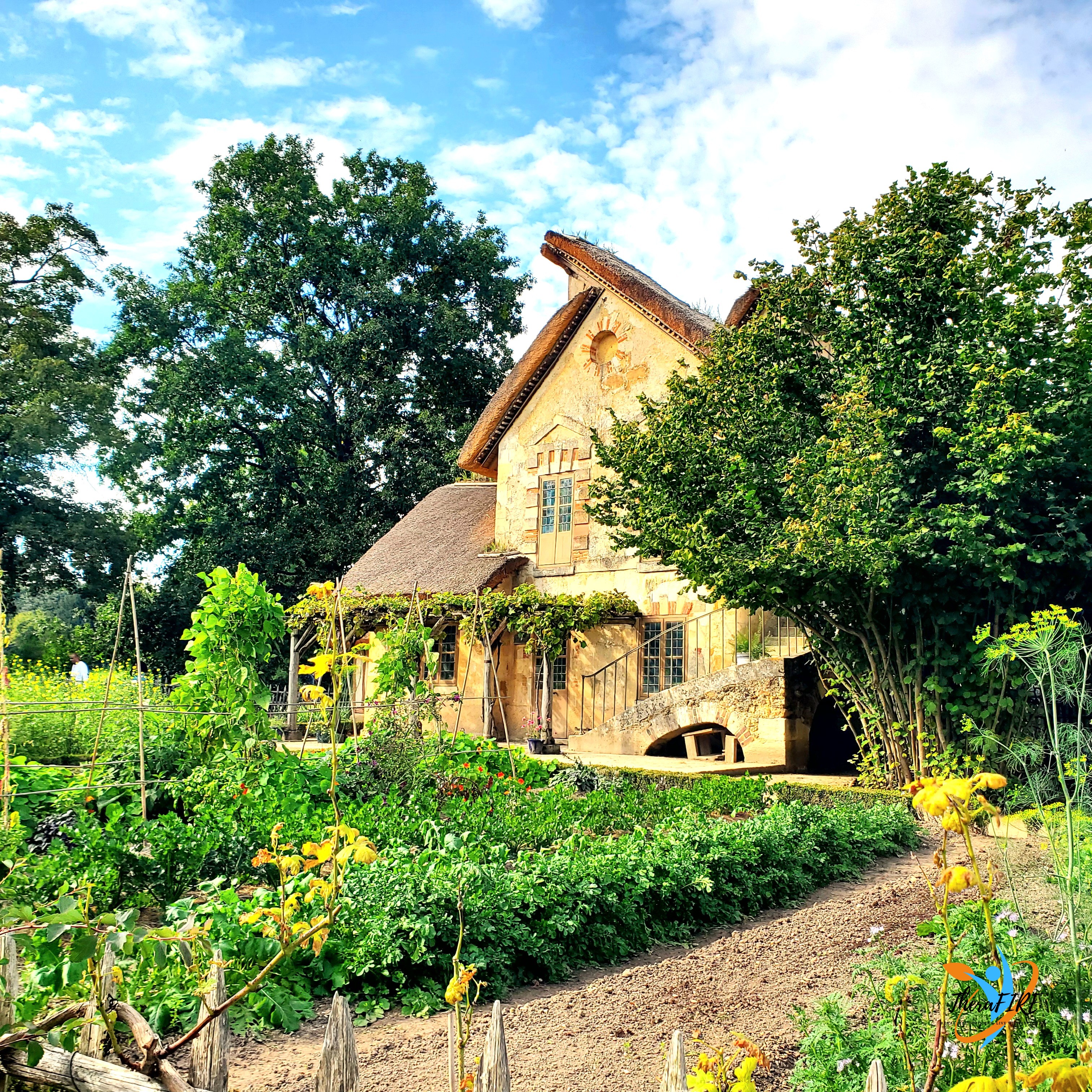
The gardens surrounding the Petit Trianon are just as enchanting as the palace itself. Covering over 40 acres, they offer a delightful mix of formal French gardens, romantic English landscapes, and the picturesque village known as the Queen’s Hamlet.
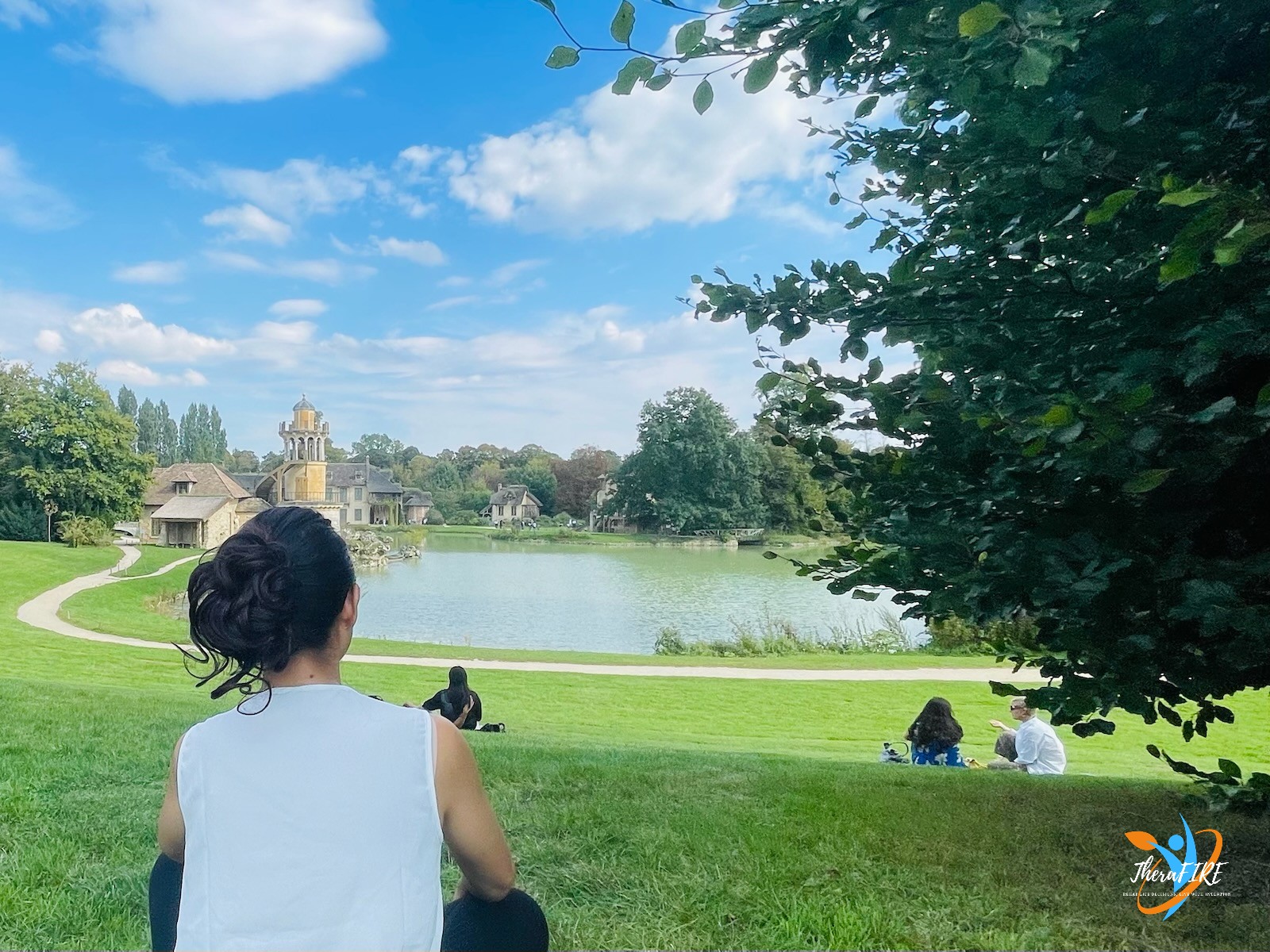
It would take another 10 minutes to reach Marie Antoinette’s tiny village in the gardens. With its twelve charming cottages clustered around a small lake, it’s like something out of a storybook. Although, this wasn’t just a plaything for the queen; it was a working farm with gardens, orchards, a dairy, and even a mill. Marie Antoinette sometimes participated in farm activities, and the produce was used to supply the royal table. It’s fascinating to think of her escaping the formality of the court to enjoy a simpler, more rustic lifestyle here.

It’s important to remember that while the Queen’s Hamlet was a place of beauty and escape for Marie Antoinette, it also became a symbol of her extravagance and disconnect from the realities of the French people. As economic hardship gripped France, Hamlet became a target of resentment and anger. The queen’s “playing peasant” was seen as frivolous and insensitive, further fueling the revolutionary sentiment.
Exhausted But Enchanted
As we boarded the train back to Paris, we couldn’t help but feel a sense of awe and wonder at Versailles’s sheer magnificence. It transports you back in time, immersing you in the grandeur and opulence of the French monarchy. From the Hall of Mirrors to the Queen’s Hamlet, every corner of Versailles holds a story, a secret, a glimpse into a bygone era. It’s a place that will stay with us long after we’ve left its gilded gates.
Sources
Château de Versailles official website.
This source provides general information about the palace, gardens, and Trianon estates, including the number of rooms, acreage, and historical context.
Trial Retirements are periods we dedicate to travel to beautiful countries to know if they are perfect for us when we eventually retire. The time spent outside work will preview our habits and behaviors when we reach Financial Independence and, of course, our way to recharge after months of hard work.
Anything we missed? Questions? Violent reactions? Let us know in the comments below!
Check out our trial retirements in Mexico, Costa Rica, and Peru! You can also follow our week-long adventures in Paris and Porto. Subscribe and follow TheraFIRE on our social media!
 TheraFIRE