
As our stay in Spain slowly came to its conclusion, we felt the need to see yet another of its iconic cities. After seeing tons of beautiful photos online and much contemplation, we bought bus tickets from Málaga to spend 2 days and 1 night in Seville. It was a good decision on our part, given the torrential rains that greeted us upon arrival. We had the chance to experience Seville’s historic center the following day, underneath bright sunny skies. With a small day bag in tow, we took the 2.5-hour bus ride to Seville’s beating heart.
2 round-trip bus tickets from Málaga to Seville: $80.00
Luckily, we had travel rewards points saved, so we were able to book a hotel right next to the Real Alcazar. After a half-hour walk in the rain along puddled streets, we found ourselves entranced between the city’s two iconic landmarks. We were excited to be at the center of it all, especially with the limited time we had to explore.
Accommodation costs: $0 (Travel Rewards Points)
Seville’s history spans over 2,200 years, beginning as the Roman city of Hispalis and achieving its first golden age as the intellectual and commercial capital of the Muslim-ruled Al-Andalus for over five centuries. After the Christian Reconquista in 1248, the city reached its peak in the 16th century by holding a trade monopoly with the Americas, funneling immense wealth through its port, and fostering another golden age.

Today, as the capital of Andalusia and one of the largest cities in Spain, Seville is a vibrant, cosmopolitan hub celebrated for its exceptional architectural heritage, including three UNESCO World Heritage Sites, and its deep cultural roots.
1. Real Alcázar de Sevilla
The Real Alcázar de Sevilla is the oldest functioning royal palace in Europe, dating back to the 10th century as a Muslim fortress and governmental seat. Its current splendor is the result of continuous development by successive rulers, most famously after the Christian conquest in the 13th century.

King Pedro I commissioned the stunning Mudéjar Palace in the 14th century, which masterfully blends Islamic artistic traditions with Christian Gothic and Renaissance styles, serving as a crucial administrative and residential center throughout history. Real Alcazar still hosts the Spanish royal family today. It stands as a magnificent, living monument to Seville’s centuries of cultural integration, renowned for its intricate tilework, lush gardens, and architectural beauty.
We wandered through the narrow streets and patios surrounding the palace, but did not explore its gardens and architecture from the inside. It would be on our priority list on our next visit to Seville. For information on opening times and tickets, visit the official website of the Real Alcázar de Sevilla.
2. Catedral de Sevilla
The Catedral de Sevilla, officially the Catedral de Santa María de la Sede de Sevilla, is the largest Gothic cathedral in the world and a UNESCO World Heritage site. It was built upon the ruins of the city’s former Great Mosque following the Christian Reconquista in 1248. Its most famous and enduring feature is the Giralda, the former minaret of the mosque, which was converted into the bell tower, symbolizing the city’s profound architectural blend of Islamic and Christian heritage. Beyond its sheer scale, the cathedral is home to vast artistic treasures, the famed Patio de los Naranjos, and the tomb of explorer Christopher Columbus.

The Catedral de Sevilla and Real Alcázar make you feel awed as you stand in the Plaza del Triunfo in between the two colossal landmarks of Seville. As expected, it is busy with tourists queuing to enter both buildings. We enjoyed the local energy and walked around the cathedral’s perimeter along Av. de la Constitución, but did not have the chance to appreciate it from within. You can visit the official website of the Catedral de Sevilla for more information.
3. Plaza de España
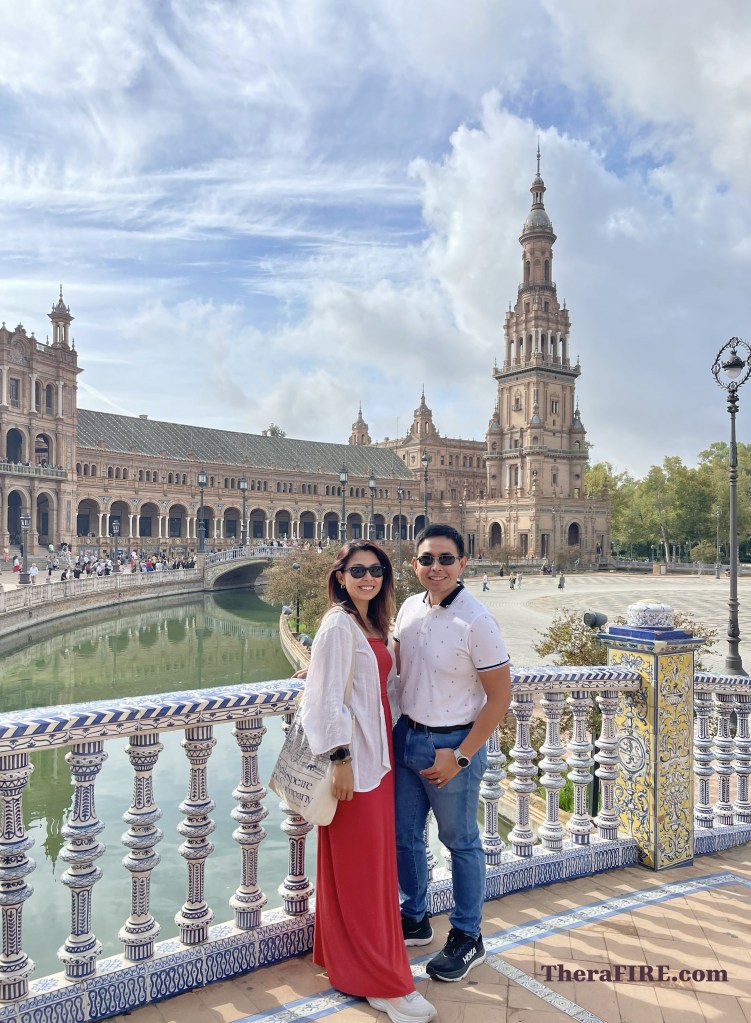
A short 20-minute walk from the Catedral de Sevilla, we set out to witness one of the grandest and most intricate plazas we had ever visited, the reason we wanted to visit Seville in the first place.
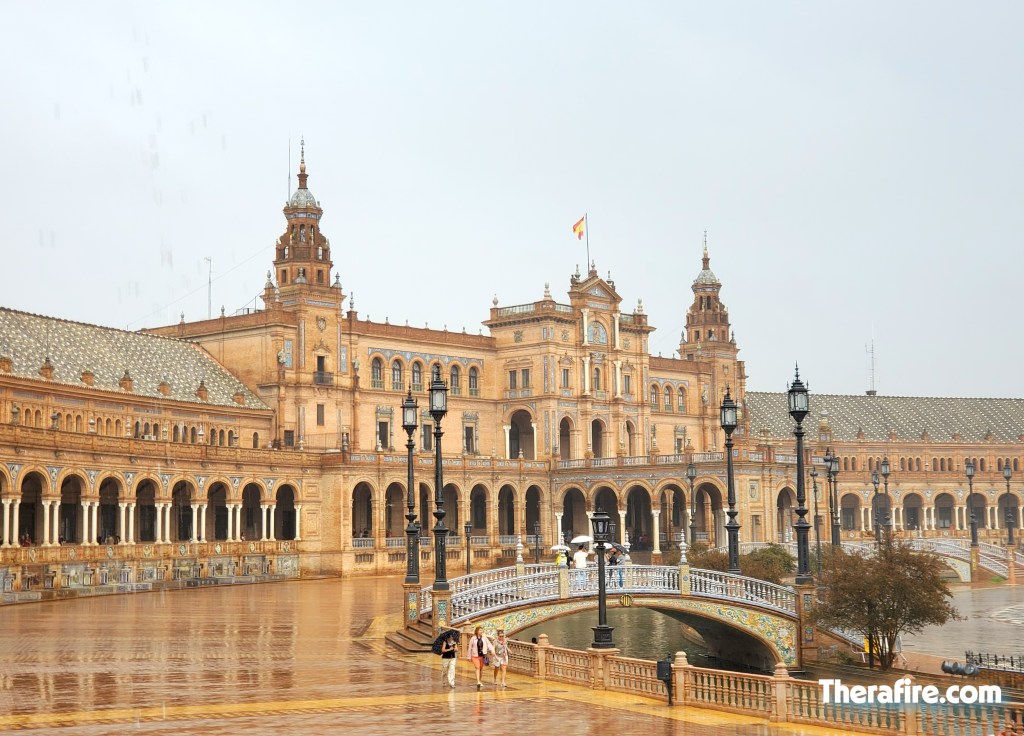
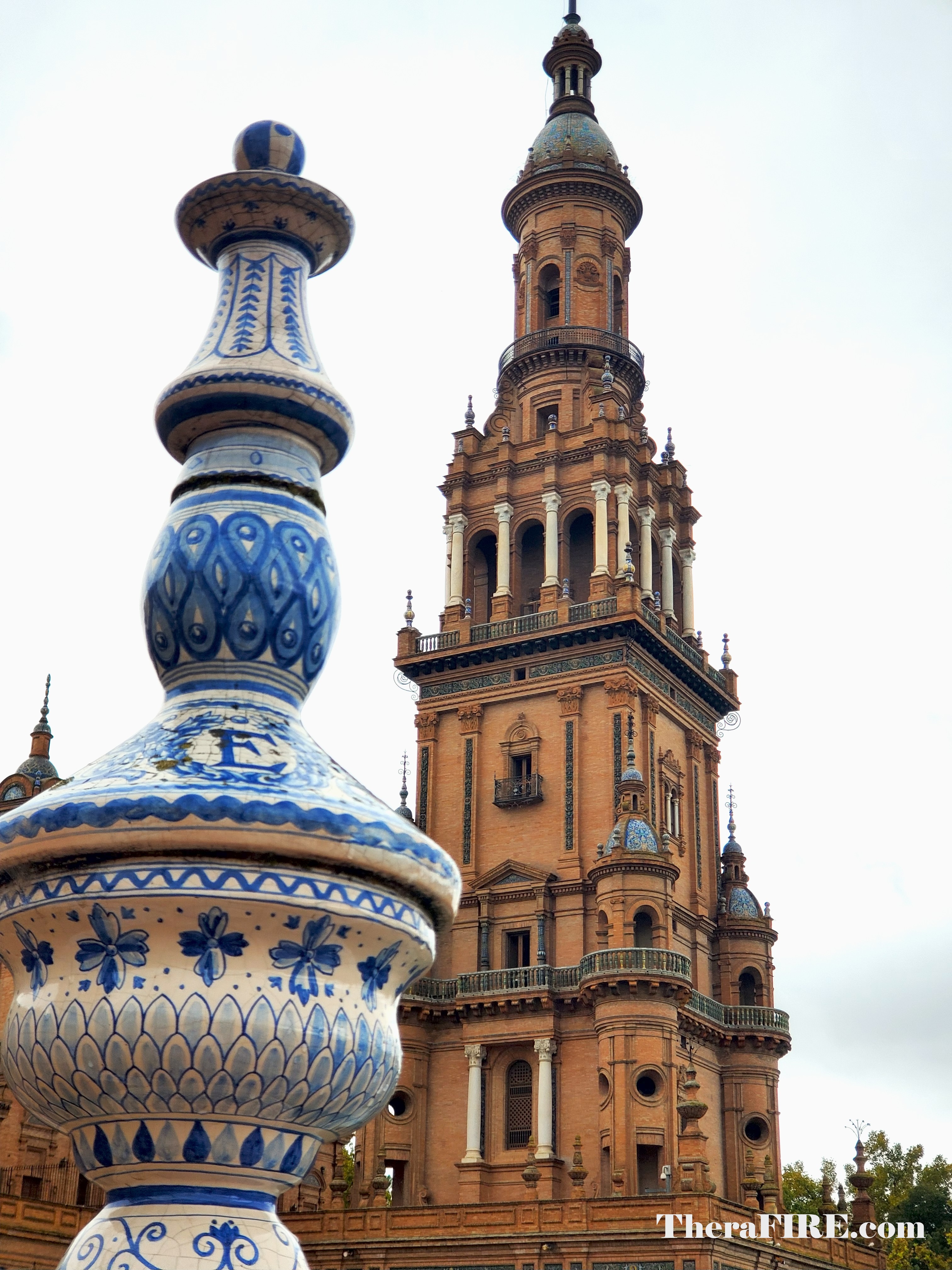
Located within the prominent Parque de María Luisa, the Plaza de España is a colossal, semi-circular landmark in Seville, designed for the Ibero-American Exhibition of 1929. It showcases Spain’s industrial and technological advancements, beautifully combining elements of the Renaissance and Moorish Revival styles. The Plaza de España features elaborate brickwork, wrought iron, and vibrant ceramics known as azulejos.
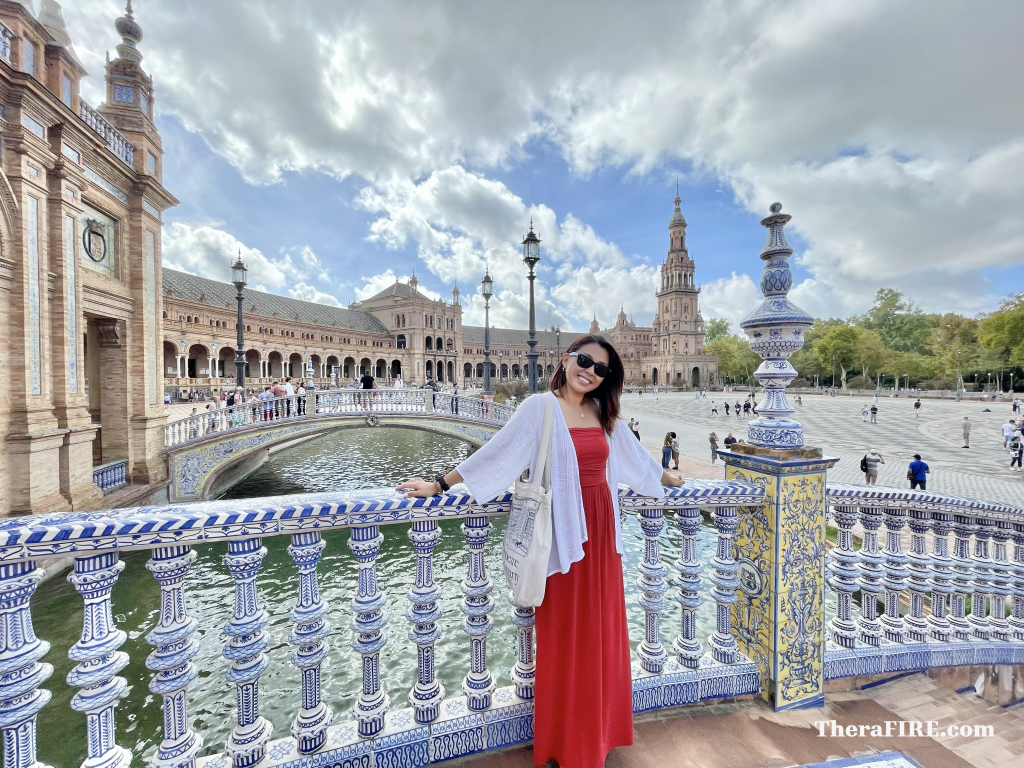
The plaza is defined by a beautiful moat crossed by four bridges and, most notably, 52 tiled alcoves dedicated to Spanish provinces. Every corner is a photo opportunity, made grander by horse-drawn carriages parading tourists through the massive park. Its grand scale and intricate detailing have made it a favorite location not only for tourists but also for international filmmakers, who have depicted it as the capital city of Naboo in Star Wars.
4. Setas de Sevilla
The Setas de Sevilla, officially named the Metropol Parasol, is a striking contemporary landmark completed in 2011, built to revitalize the previously neglected Plaza de la Encarnación. Celebrated as one of the largest wooden structures in the world, it is composed of six immense, mushroom-shaped parasols that contrast sharply with Seville’s historic architecture.

The structure is multi-functional, providing shade for the public square and market below, housing the Antiquarium archaeological museum at its base, and featuring a panoramic walkway and viewing platform at its apex that offers spectacular, modern 360-degree views over the ancient city. Within 15 minutes’ walking distance of the Catedral de Sevilla, it is a noteworthy spot to learn about Seville. The entry ticket gives access to the viewing platform and the Feeling Seville exhibit.
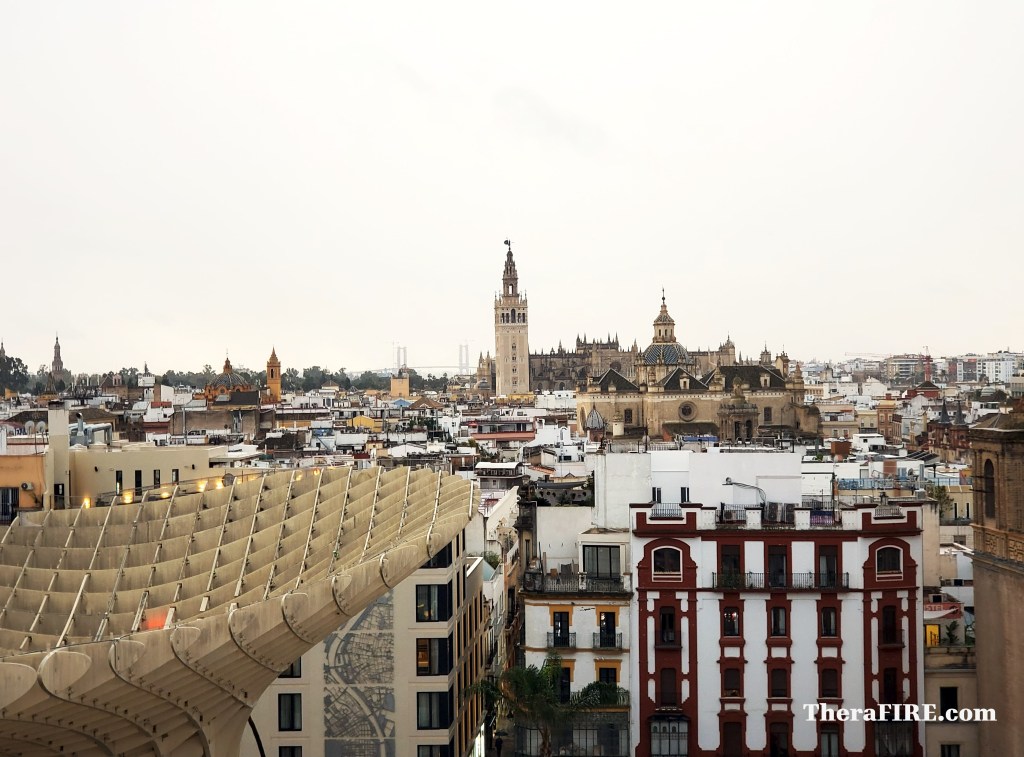
The 15-minute exhibit aims to engage all five senses, using curved, high-resolution screens, hi-fidelity audio, and even carefully selected scents (such as orange blossom and incense) to evoke the spirit, light, sound, passion, and flavor of Seville. Please visit their official website for up-to-date information.
2 Entry Tickets: $36.00
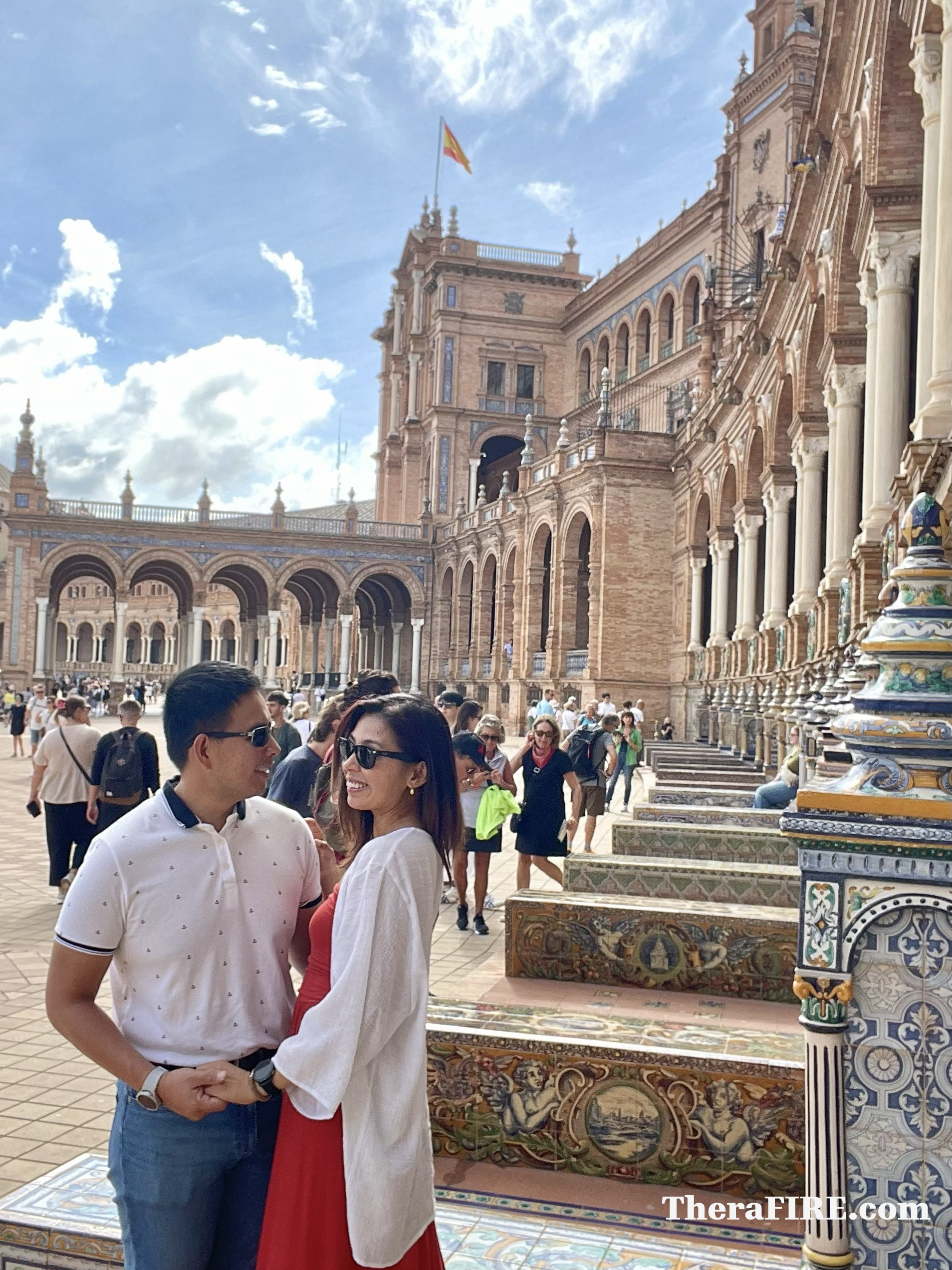
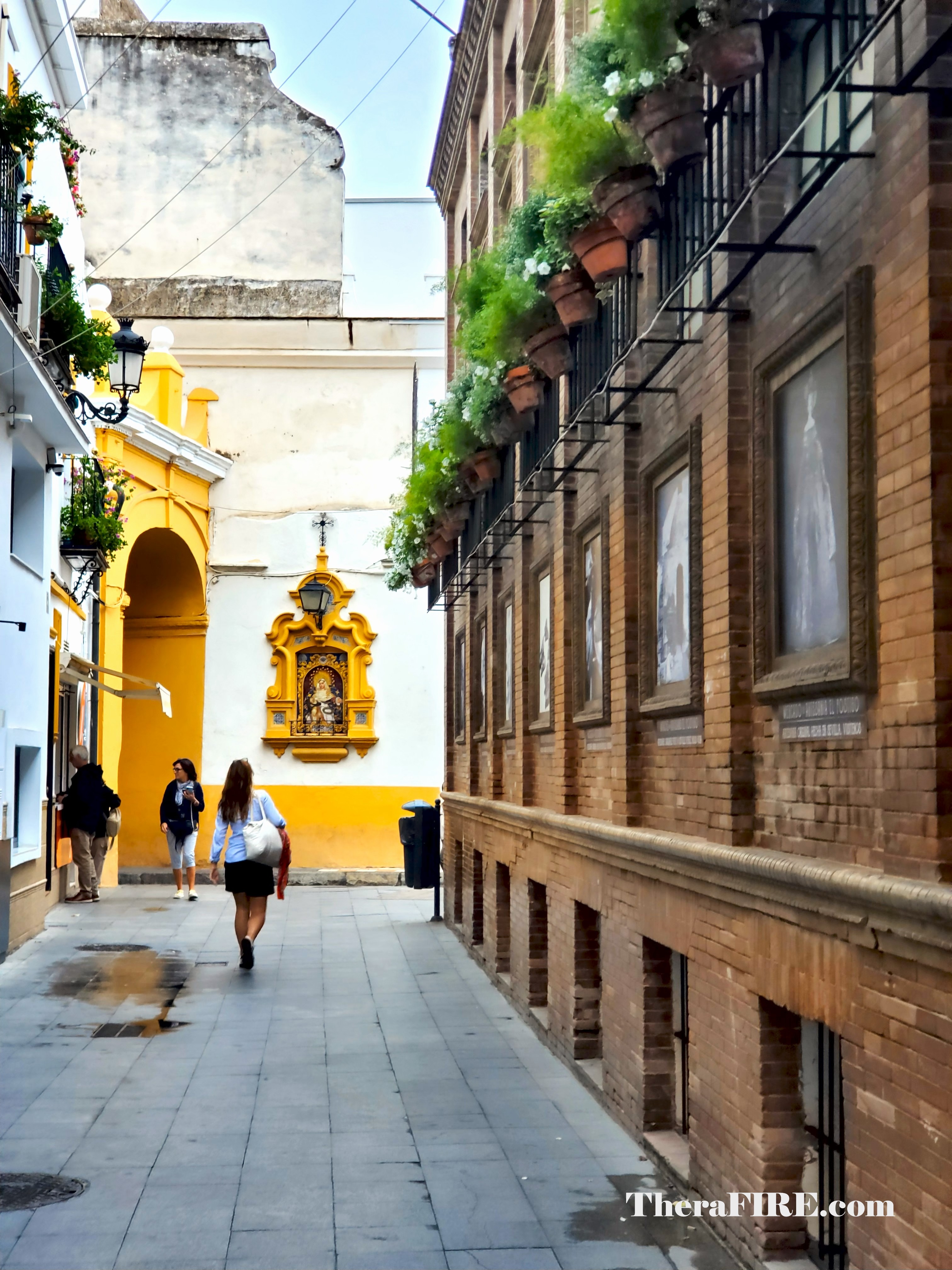
Our visit to Seville highlighted the city’s stunning architecture and vibrant culture, even if time constraints limited our exploration. Each landmark we encountered, from the magnificent Real Alcázar and the awe-inspiring Catedral de Sevilla to the breathtaking Plaza de España, showcased a unique blend of artistic influences and historical significance that only adds to Seville’s appeal. While our guide is not as detailed, we hope it serves as a brief snapshot of what this enchanting city has to offer. We left with a desire to return, eager to delve deeper into Seville’s hidden treasures and fully appreciate its hidden wonders on our next visit.
Trial Retirements are periods we dedicate to traveling to beautiful countries to know if they are perfect for us when we eventually retire. The time spent outside work will preview our habits and behaviors when we reach Financial Independence and, of course, our way to recharge after months of hard work.
Anything we missed? Questions? Violent reactions? Let us know in the comments below!
Check out our trial retirements in Mexico, Costa Rica, and Peru! You can also follow our week-long adventures in Paris and Porto. Subscribe and follow TheraFIRE on our social media!
 TheraFIRE