
Stepping off the plane and into the warm embrace of Málaga, we knew we were in for something special. Our Andalusian getaway was a perfect blend of days lost in a maze of streets, wandering inside grand churches and palaces, and soaking in the city’s culinary delights and infectious energy. It truly offered a kaleidoscope of experiences, from sun-kissed beaches to incredible day trips.

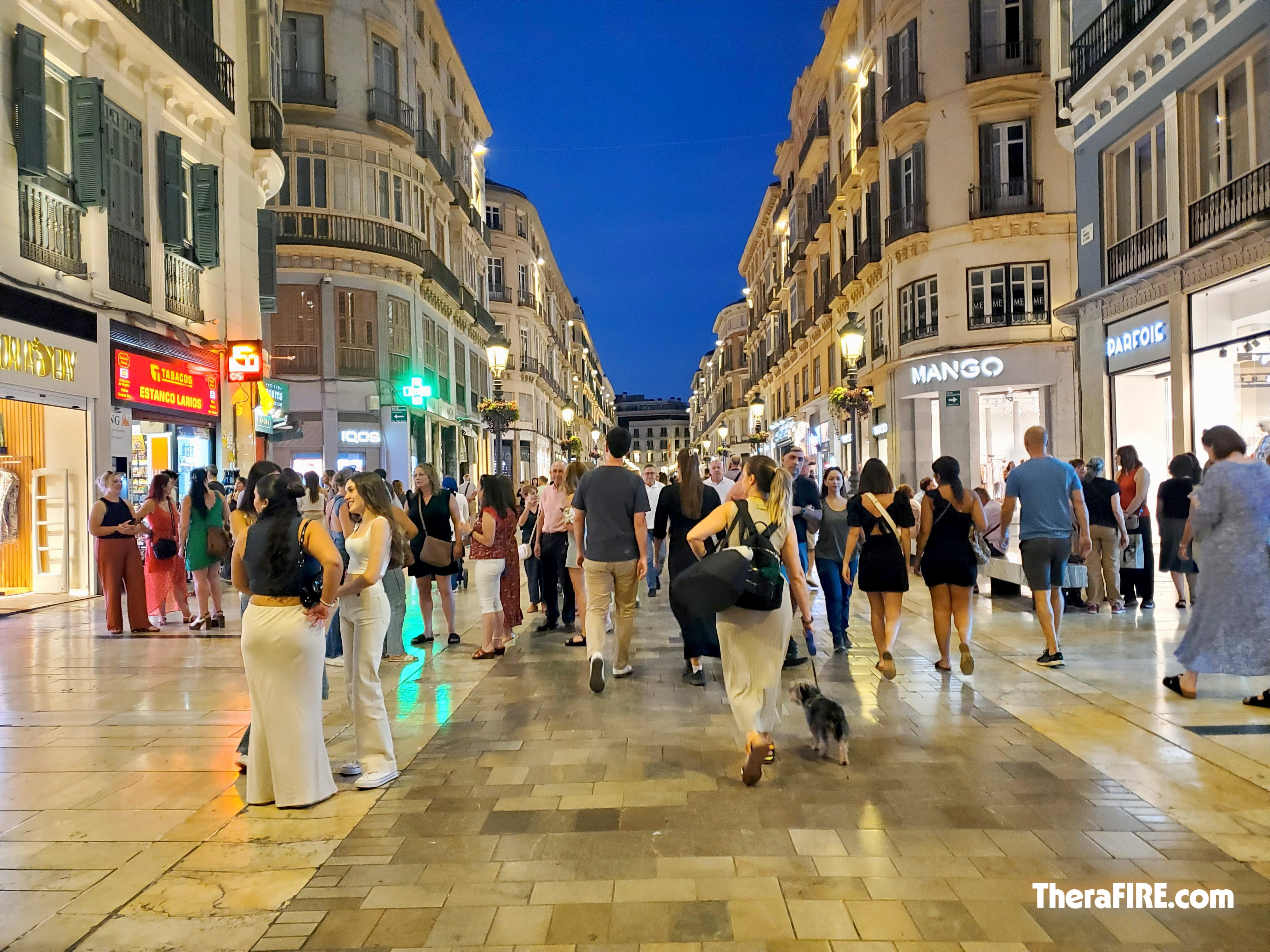
Our base for this 10-night exploration was a small 1-bedroom apartment nestled right in the heart of Málaga’s Centro Histórico. This was one of the best locations we stayed in on our 60-day Euro trip. Being able to step out directly where everything happens, surrounded by historical buildings and lively plazas, gave us an immediate sense of immersion. Early mornings, we would jog along the Calle Marqués de Larios and watch as shops and cafes came to life. Our central location proved invaluable. We were close enough to train and bus routes, which allowed us to absorb the city’s pulse and return easily after hours of exploration.
Getting Around
Navigating Málaga was a breeze, primarily thanks to our weary feet! The Centro Histórico is wonderfully compact and best explored on foot, allowing you to discover hidden courtyards and architectural gems around every corner. For longer distances or to rest our legs, we found Málaga’s bus system to be incredibly convenient. We used our credit cards for the bus pass, which made hopping on and off effortless. Just remember to use one credit card for each person in your group. There is also a direct commuter train to and from Málaga Airport, Line C1. The station is located at Terminal 3 of the airport. Trains run every 20 minutes, and it takes about 12 minutes to reach Málaga Centro. You can purchase tickets on machines using credit or debit cards. Google Maps has up-to-date routes and arrival times.
A Glimpse into Our Spain Expenses
- Accommodation: $875.00
- Local Transportation: $200.00
- Meals & Dining Out: $660.00
- Activities & Attractions: $500.00
- Shopping: $255.00
Málaga’s Historical Heartbeat
Our journey through time began at the Plaza de la Marina. A square designed in the mid-19th century after the old Muslim walls to the south of the city were demolished. It’s often the first sight visitors see when arriving from the Port of Málaga.
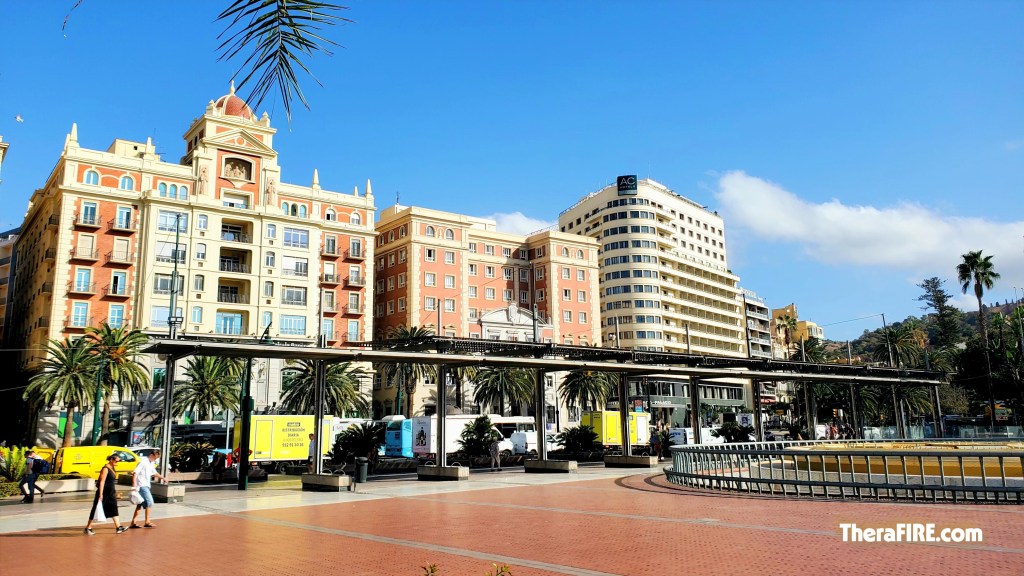
Plaza de la Marina features beautifully landscaped gardens with palm trees and a central fountain. It’s surrounded by elegant buildings that harmonize with the historic quarter. The square also houses the Municipal Tourist Information Office, which provides helpful information about the city.
Across the main street, Alameda, is the very beginning of Málaga’s most famous and elegant shopping street. Presiding over its entrance, an enduring symbol of Malaga’s transformation, stands the Monumento al Marqués de Larios. This grand bronze and Carrara marble sculpture, created by the renowned artist Mariano Benlliure, was made in honor of Manuel Domingo Larios y Larios. The Marquis was a key figure in Málaga’s 19th-century industrial and economic development, particularly known for funding the construction of the very street that bears his family’s name.
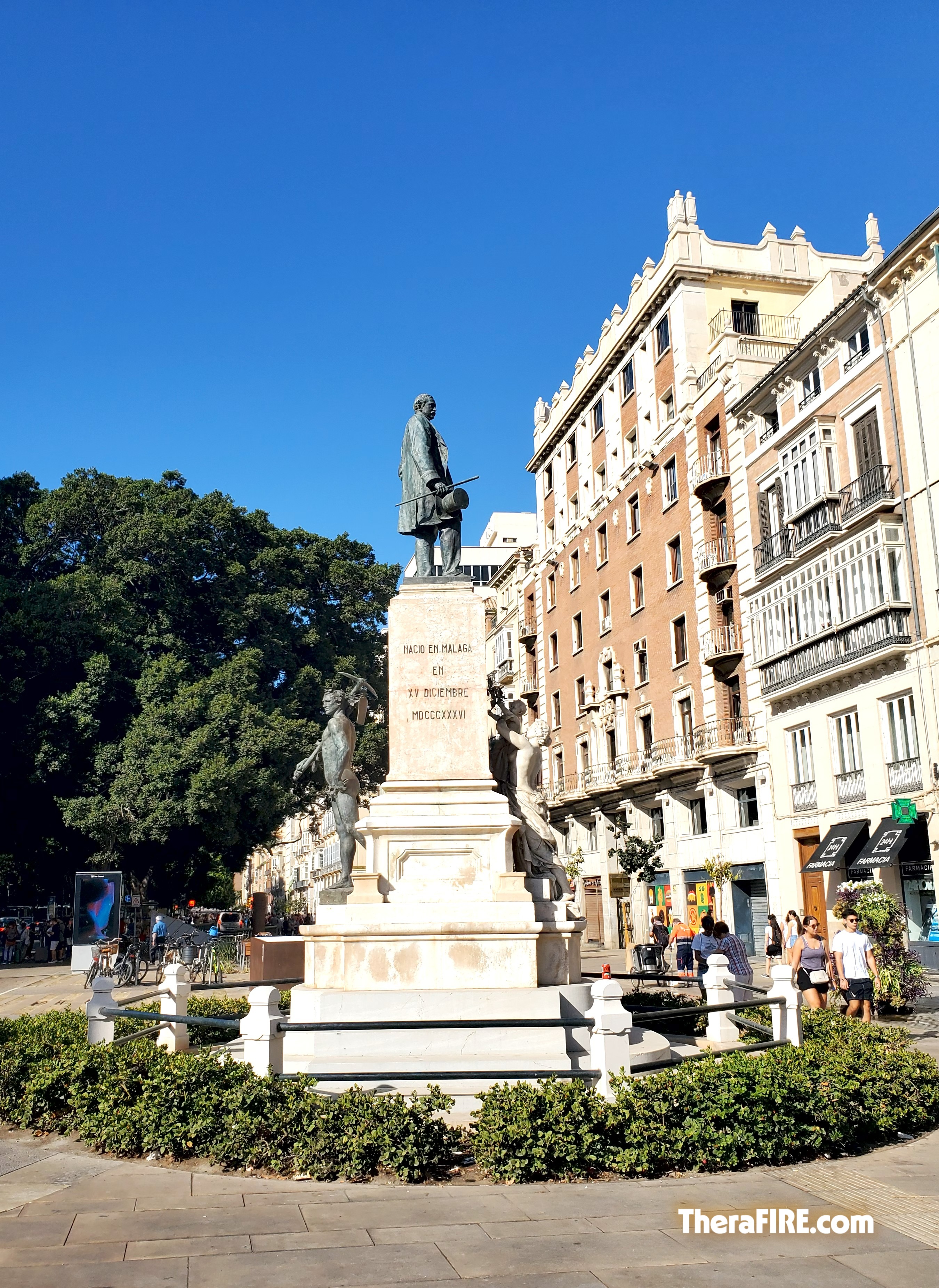
Its pedestal features allegorical figures at its base, including a male bronze figure representing “Work” and a female marble figure representing ” Gratitude.” During the proclamation of the Second Spanish Republic in 1931, the statue was toppled and thrown into the harbor, with the “Work” figure temporarily replacing it on the pedestal. It was later restored to its original position in 1951. The monument portrays the Marquis looking down on Calle Larios, symbolizing his vision of the city.
The Calle Marqués de Larios, Málaga’s elegant main shopping street, is a pedestrian boulevard admired for its beautiful buildings and high-end boutiques. Even if no part of our budget was spent shopping here, the sheer energy and refined ambiance of Larios Street were captivating. The street is named after the Marqués de Larios, whose family, as mentioned earlier, was the primary investor in its construction.
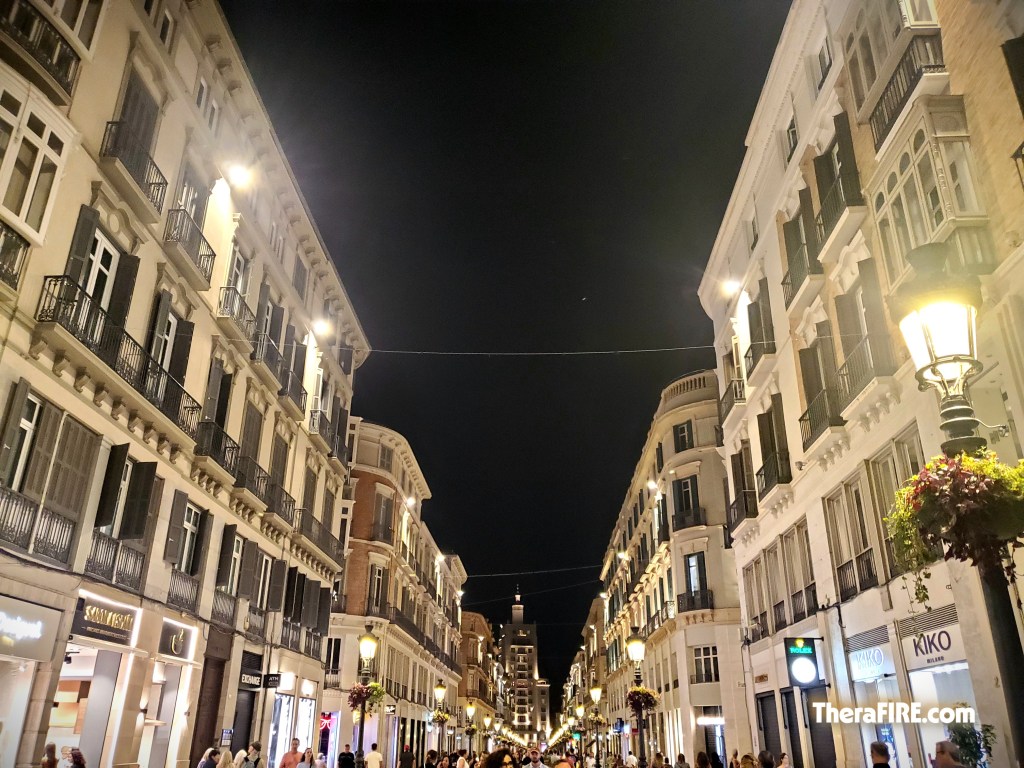
Referred to as Calle Larios, it stretches from the Alameda Principal to the Plaza de la Constitución. The architecture of Calle Larios is a striking example of late 19th-century elegance, designed by local architect Eduardo Strachan. It features symmetrical buildings with characteristic curved corners, which allowed the sea breeze to circulate, providing natural ventilation.
The Plaza de la Constitución is a historically significant place in Málaga’s old town. Throughout its history, the square has been known by various names, reflecting different periods and political changes, such as Plaza Mayor, Plaza de la Libertad, and Plaza Real. Its current name, Plaza de la Constitución, was adopted in 1812 to commemorate the Spanish Constitution inscribed on the street.
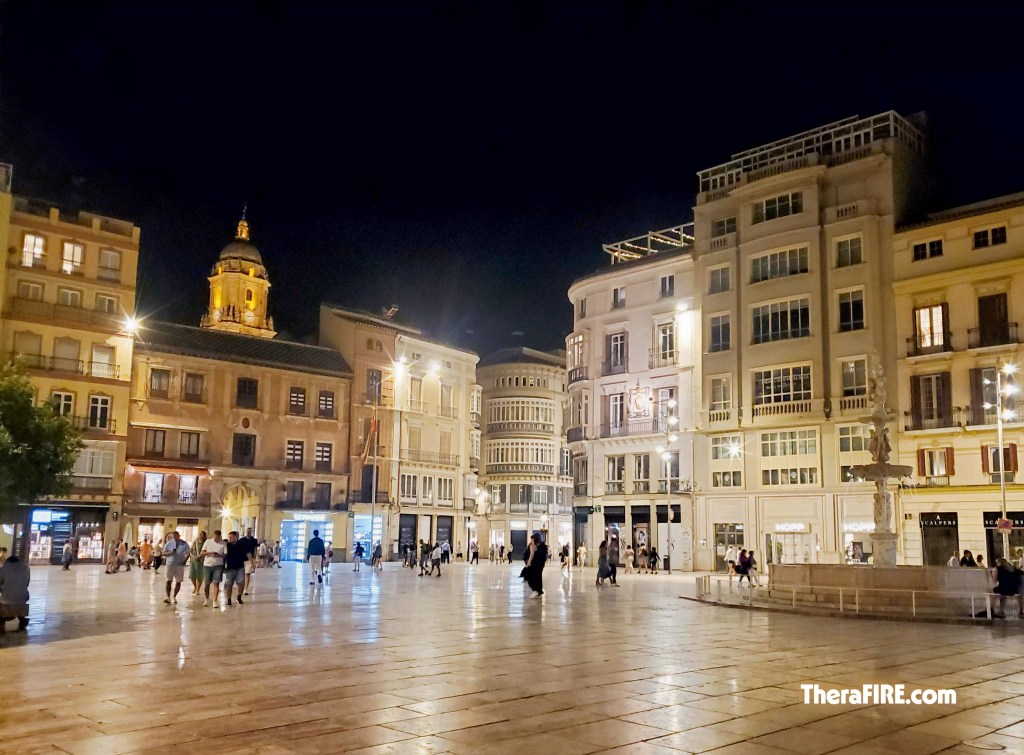
The plaza is surrounded by elegant historical buildings, many of which now house shops, cafes, and restaurants, creating a lively and inviting atmosphere. Notable features of the square include the Fuente de Génova, a marble fountain originally from Genoa, Italy, which was brought to Málaga in the 16th century. The space is often a site for different private or public-sponsored events.
Pasaje Chinitas is a charming and historically rich pedestrian alleyway that runs from the bustling Plaza de la Constitución to Calle Fresca. The passage owes its name to Antonio María Álvarez, a businessman who commissioned its construction on the grounds of the former Augustinian Convent. From the old convent, only the marble entrance leading to Plaza de la Constitución was preserved.
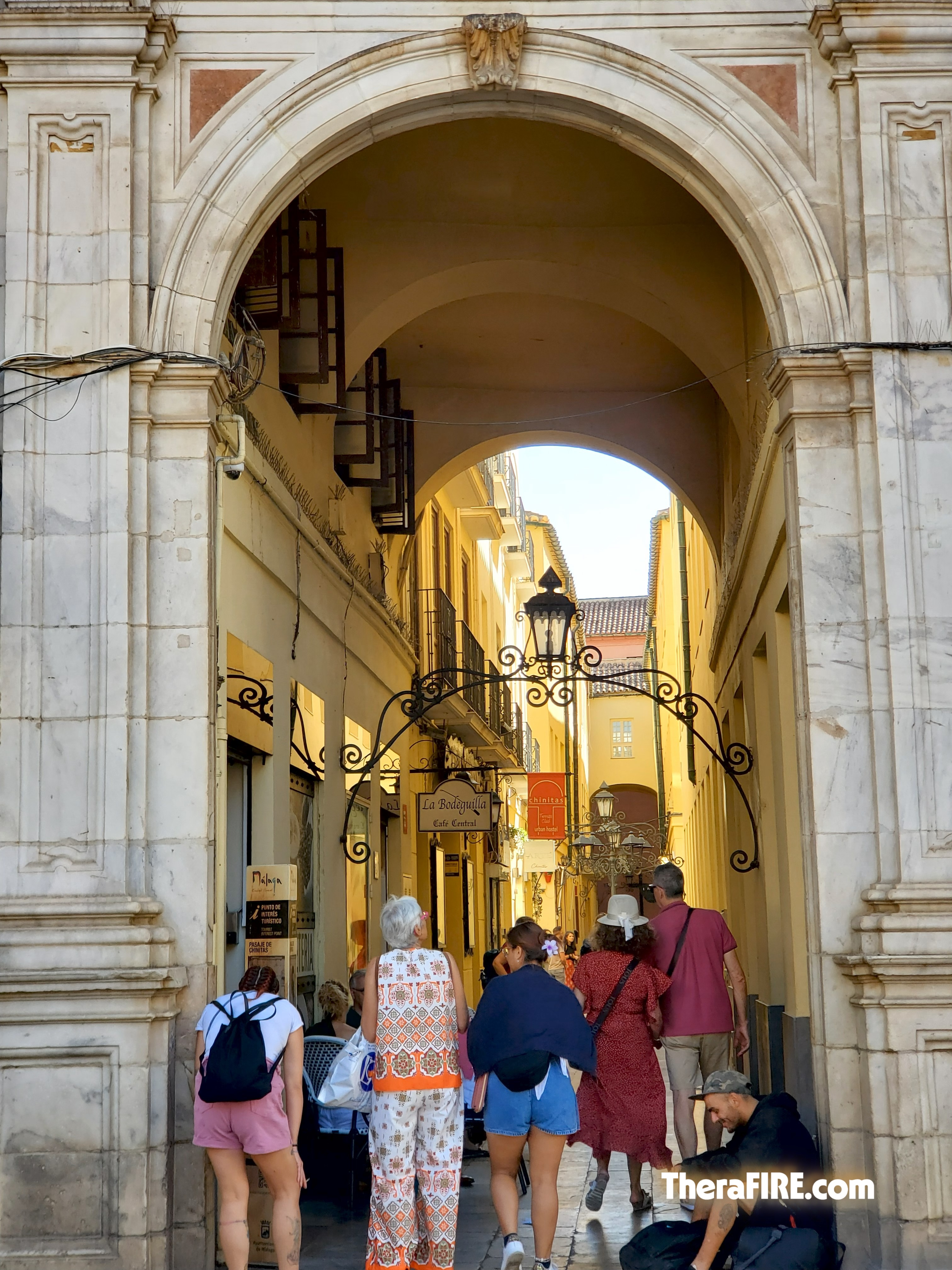
Pasaje Chinitas gained international recognition primarily due to the legendary Café de Chinitas, which operated within the passage. This famous caféwas a national reference point for flamenco singing and dancing. The poet Federico García Lorca immortalized the café in his 1931 poem, “Café de Chinitas”. Today, while the original café is gone, the street remains a lively space. It’s home to various shops, bars, and restaurants with outdoor seating, creating a moving open-air atmosphere.
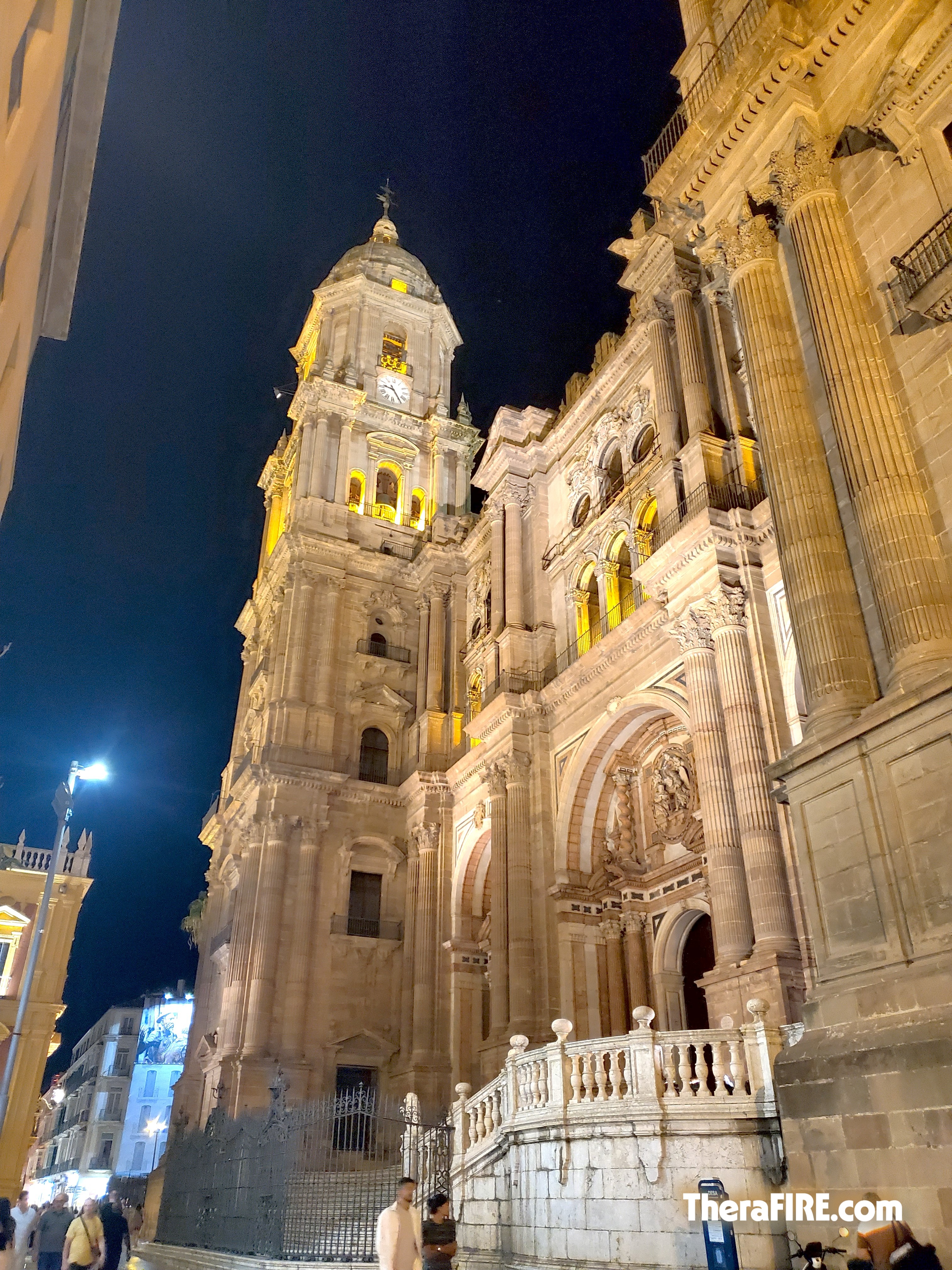
The Catedral de la Encarnación de Málaga, often affectionately known as “La Manquita” (The One-Armed Lady), is a monumental religious landmark in the city. Its unique nickname stems from its incomplete south tower, which stands unfinished despite centuries of construction.
Construction of the cathedral began in 1528 on the site of a former mosque, taking over 250 years to complete, with work continuing until 1782. This extensive building timeline resulted in a fascinating blend of architectural styles, primarily Renaissance and Baroque.
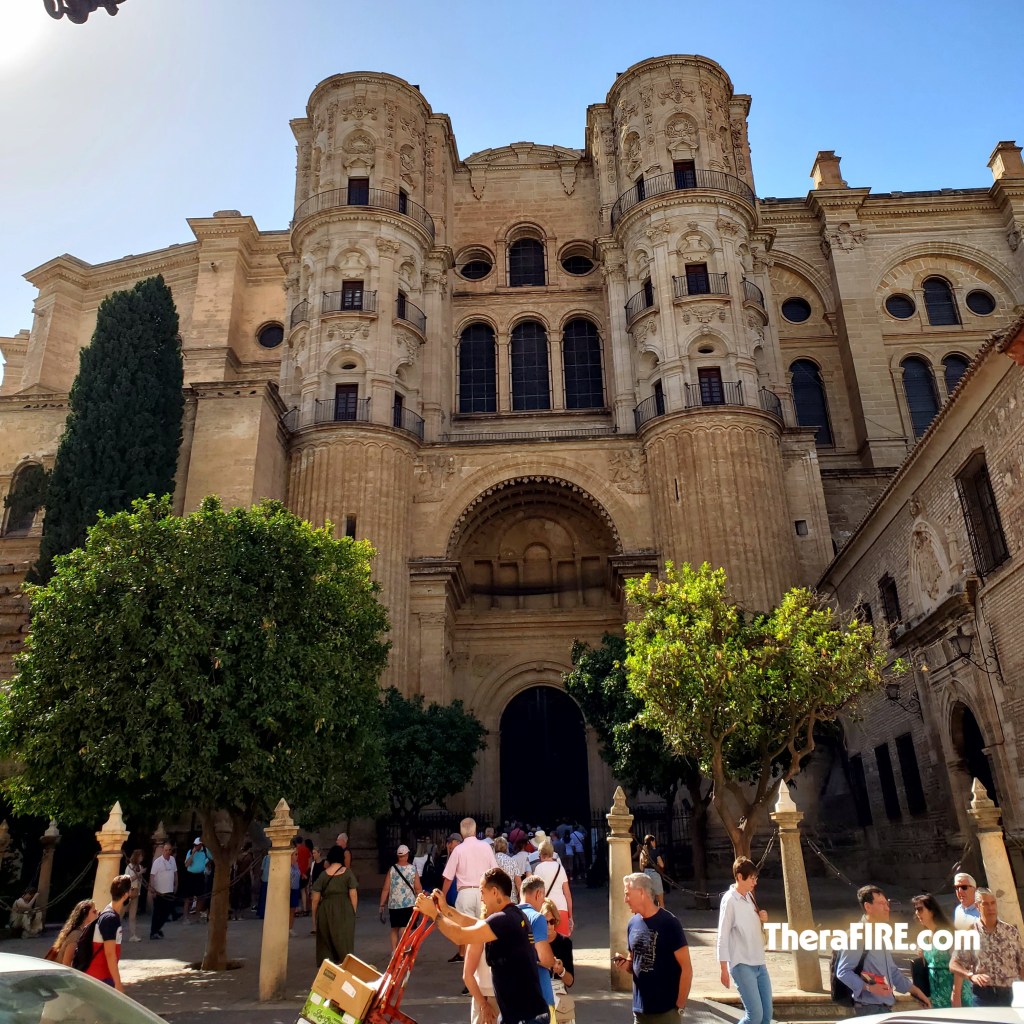
The cathedral’s exterior is impressive, featuring an ornate main facade with a Baroque portal, columns, and intricate sculptures. Inside, the vast interior is awe-inspiring, characterized by high ceilings, a grand nave, and numerous side chapels, each richly decorated with altarpieces, sculptures, and paintings. We entered the cathedral for free when we attended mass, but video and photography was not allowed. Otherwise, visitors can access certain areas, like the gardens, or explore the interior with a fee for full access or special exhibits. Visit the Malaga Catedral website for more information.
Winding within the historic center from Plaza de la Constitución to Plaza de la Merced, Calle Granada is a captivating pedestrian-only street renowned for its lively atmosphere and culinary delights. Its current name dates from after the Reconquista in 1487, as it became a principal route connecting the city center with the road leading out towards Granada.
Málaga’s central location made an overnight trip to the city of Granada an absolute must. Stepping into Granada transported us to a place of antiquity and beauty, dominated by the unforgettable presence of the Alhambra. For tips on how we experienced the unique charm of Granada’s winding streets, you’ll find all the details in our dedicated post!
As you stroll down this charming avenue today, you can still observe remnants from different eras that have shaped its unique character. Calle Granda is filled with a delightful mix of traditional Andalusian architecture, including many 19th-century buildings, alongside charming cafes, local shops, and art galleries showcasing local talent, standing on top of polished paving stones.
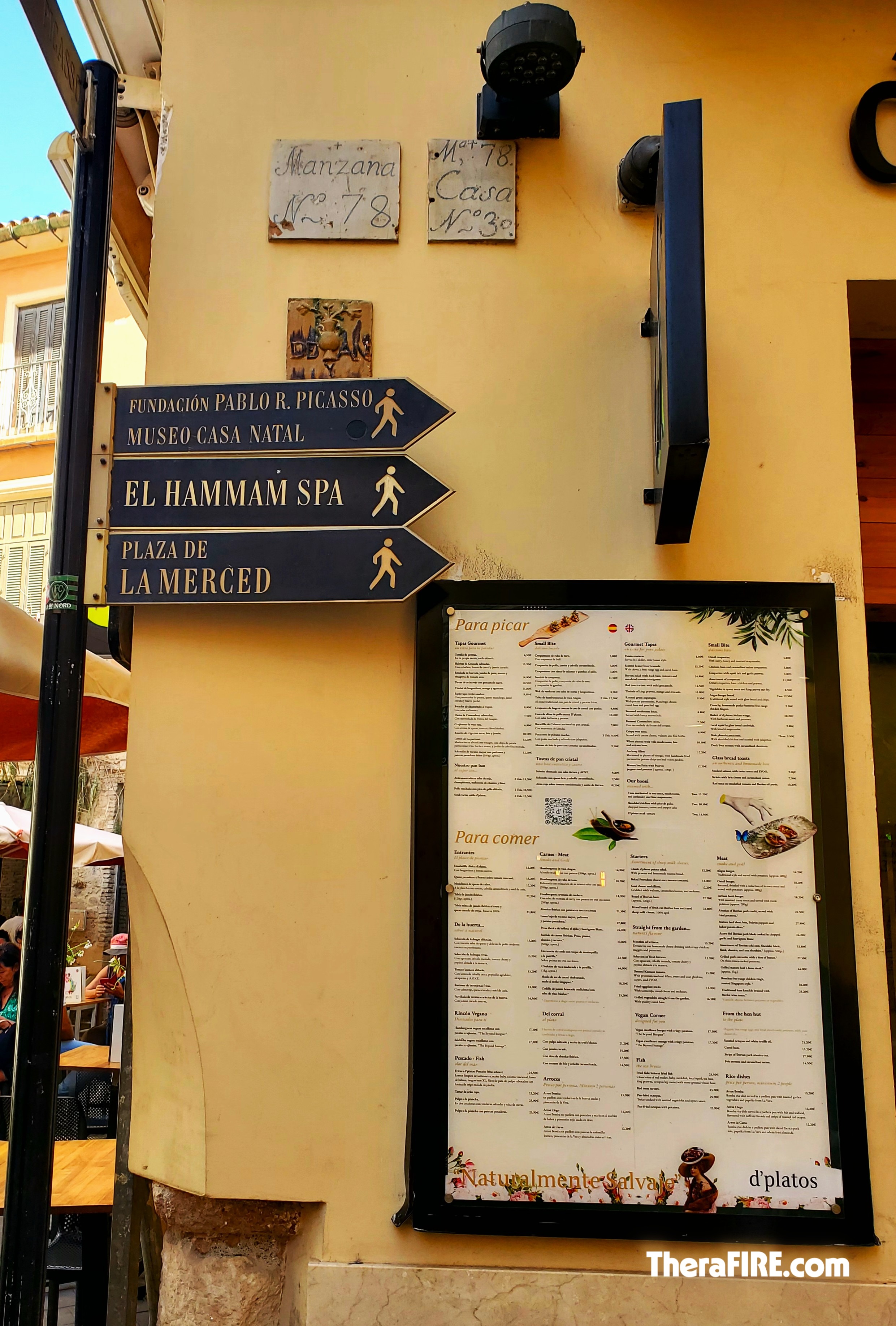
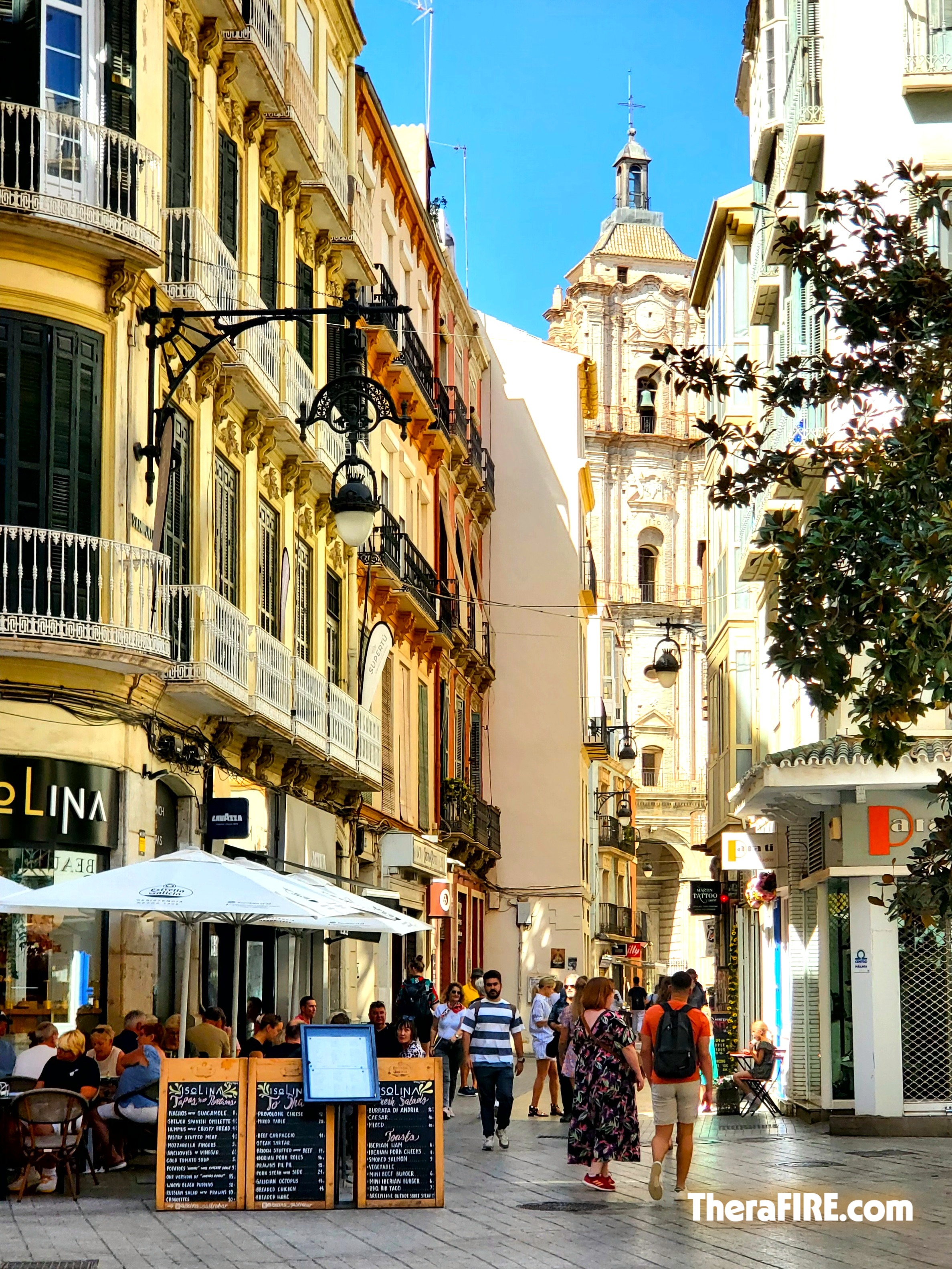
Calle Granada isn’t just about history and architecture, but also a bustling hub for contemporary culture and gastronomy. You’ll find numerous restaurants serving everything from traditional dishes like paella and gazpacho to various international cuisines. It’s particularly famed for its lively atmosphere, with an array of bars and restaurants, making it an ideal spot to relax with a glass of wine while sampling a mix of tasty tapas.
Plaza de la Merced is a serene historic square in Málaga’s city center, steeped in profound cultural significance. Its historical roots trace back to Roman times, serving as a forum or public space. A market before the Christian Reconquista, it was renamed Plaza de la Merced in honor of the Order of Mercy, which established a convent there.
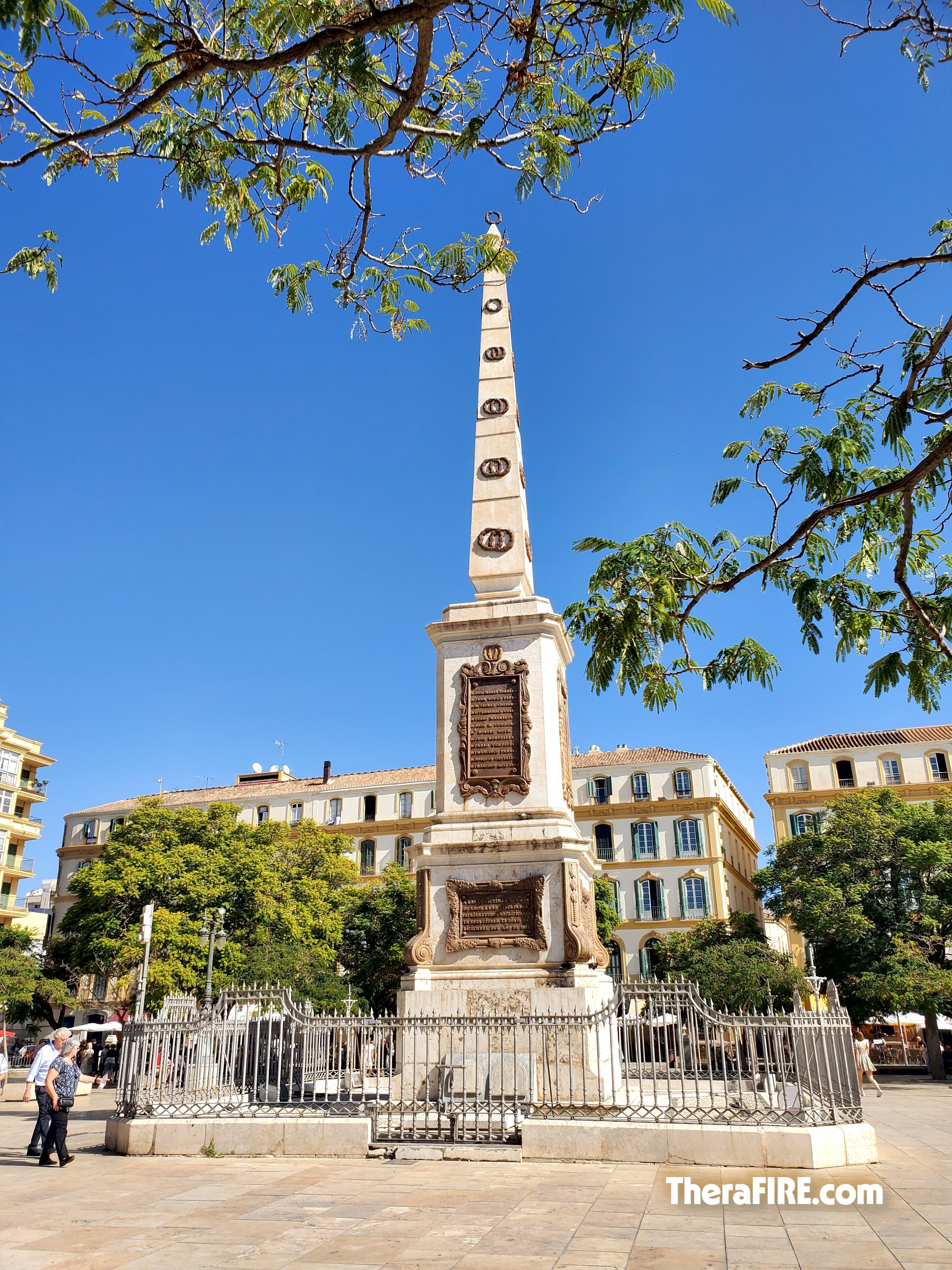
Plaza de la Merced features a central obelisk commemorating General Torrijos and his companions, who were executed for their liberal ideals in 1831. It is surrounded by numerous cafes, bars, and restaurants, making it a popular spot for locals and visitors to gather, enjoy a drink or a meal, and people-watch.
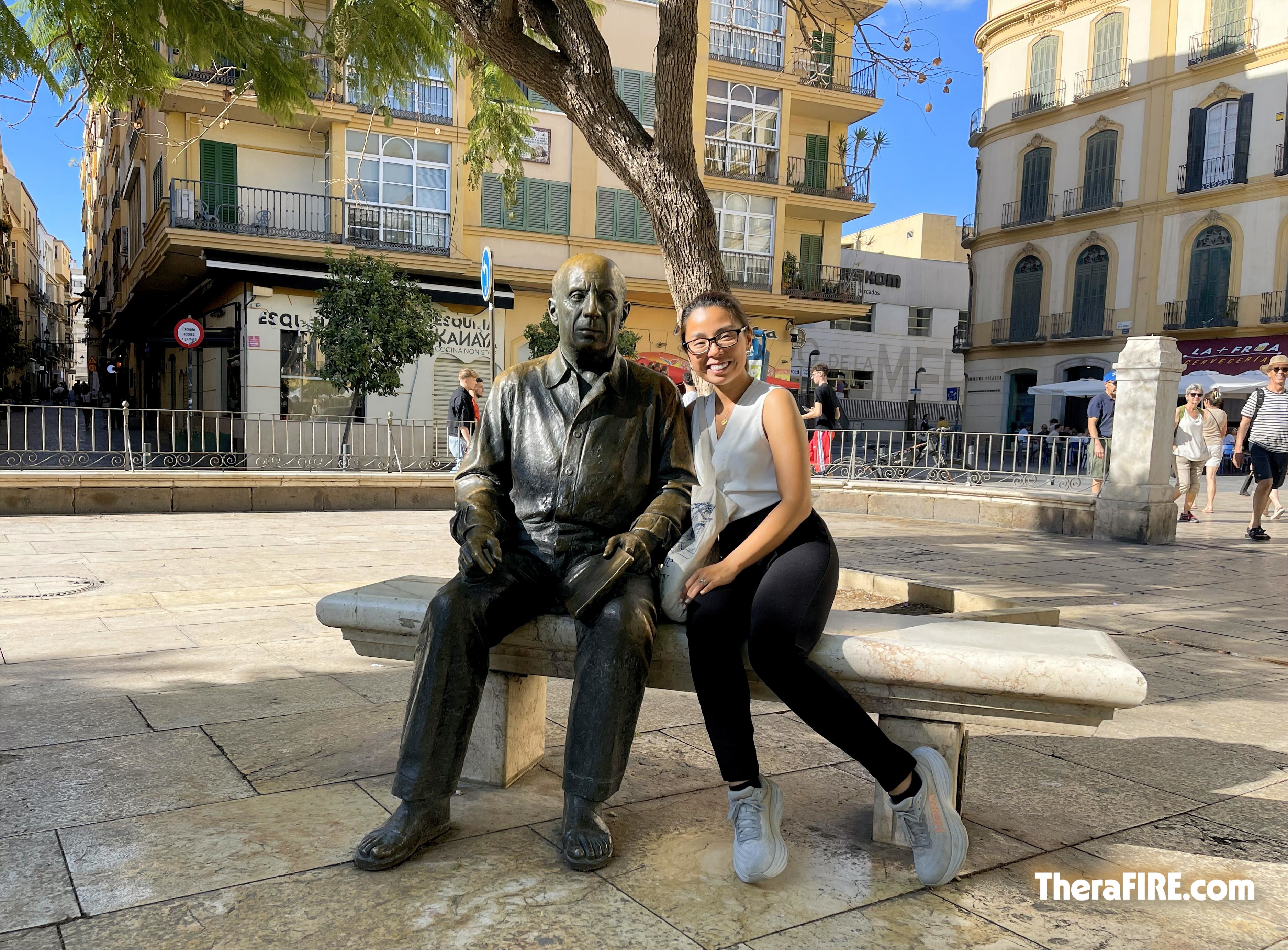
Although the square is most famous as the birthplace of Pablo Picasso, his childhood home, now the Casa Natal de Picasso, is located on one side of the plaza and is a key attraction for art enthusiasts. A bronze statue of a seated Picasso, a popular spot for photos, also graces the square.
A few minutes’ walk south on Calle Alcazabilla is the access to the Alcazaba. A sprawling Moorish fortress-palace, dating back to the 11th century.
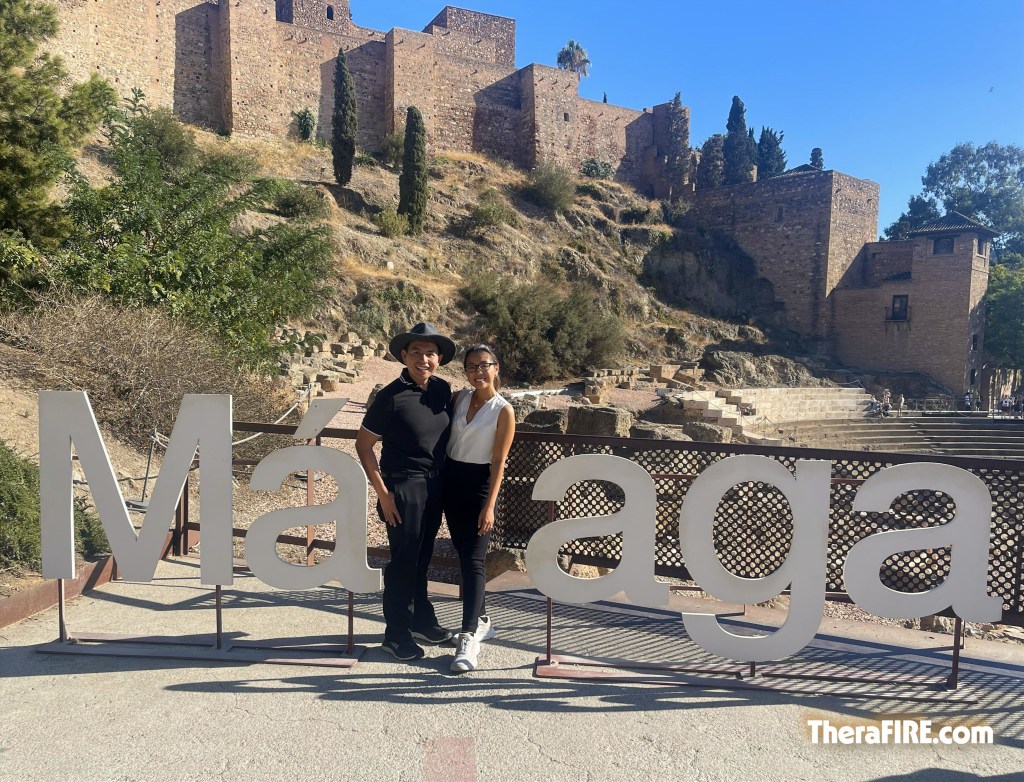
From the street, you can see the remarkably well-preserved Teatro Romano. Dating back to the 1st century AD, it offers a vivid glimpse into Málaga’s Roman past. It’s fascinating to see it nestled right against the Moorish fortress, across restaurants and bars, a visual timeline of civilizations.
We traversed Calle Alcazabilla towards the port to reach Parque de Málaga. Called Parque de la Alameda, it is a beautiful and extensive urban park stretching through the heart of Málaga, running parallel to the port. This prominent green space was created in the late 19th century, built on reclaimed land from the Alboran Sea.
The park is renowned for its diverse and lush subtropical vegetation. You’ll find a wide variety of palm trees, flowering shrubs, and rare plant species from around the world. The pathways are lined with elegant benches, fountains, and sculptures, including the Fuente de las Tres Gracias.
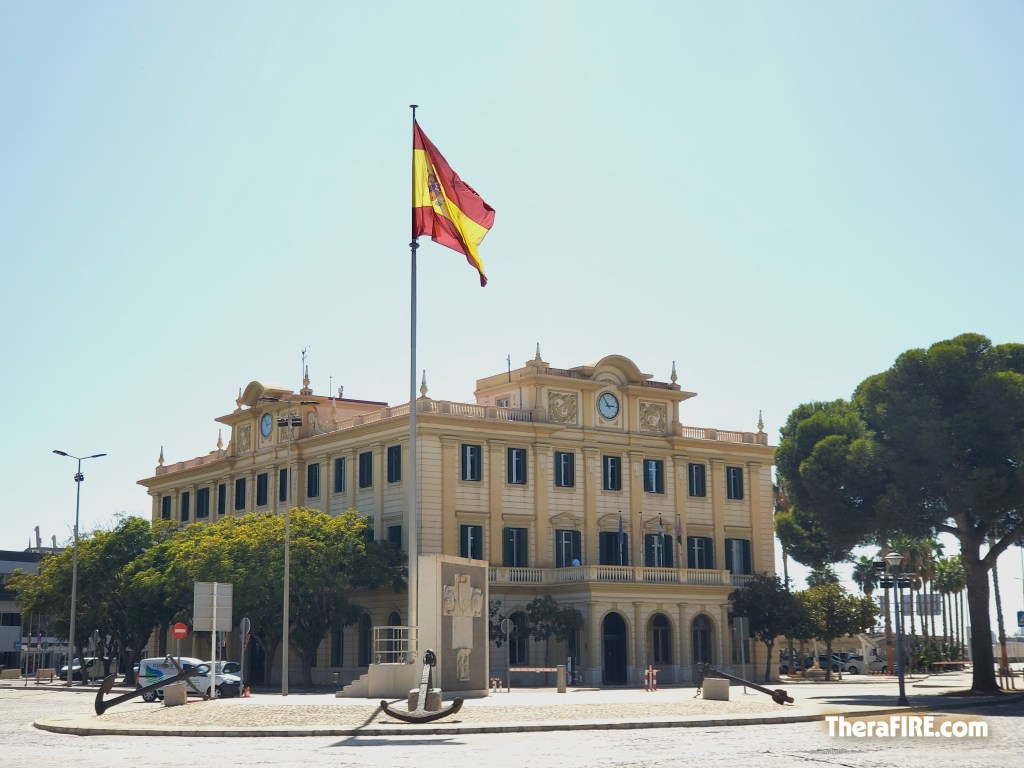
It’s a popular spot for strolls, family outings, and simply enjoying the Mediterranean climate. Its central location makes it an easy transition between the historic center, the port, and the beaches.
Muelle Uno, the modern port area transformed into a vibrant leisure space, has a beautifully designed waterfront promenade that is perfect for relaxed wandering. You can find stunning views of the yachts, the bustling port activity, and the city skyline. Trendy shops, restaurants, and cafes make it a lively spot for both locals and visitors to unwind. The Centre Pompidou Málaga cube is also a striking visual here, adding a splash of contemporary art to the maritime setting.
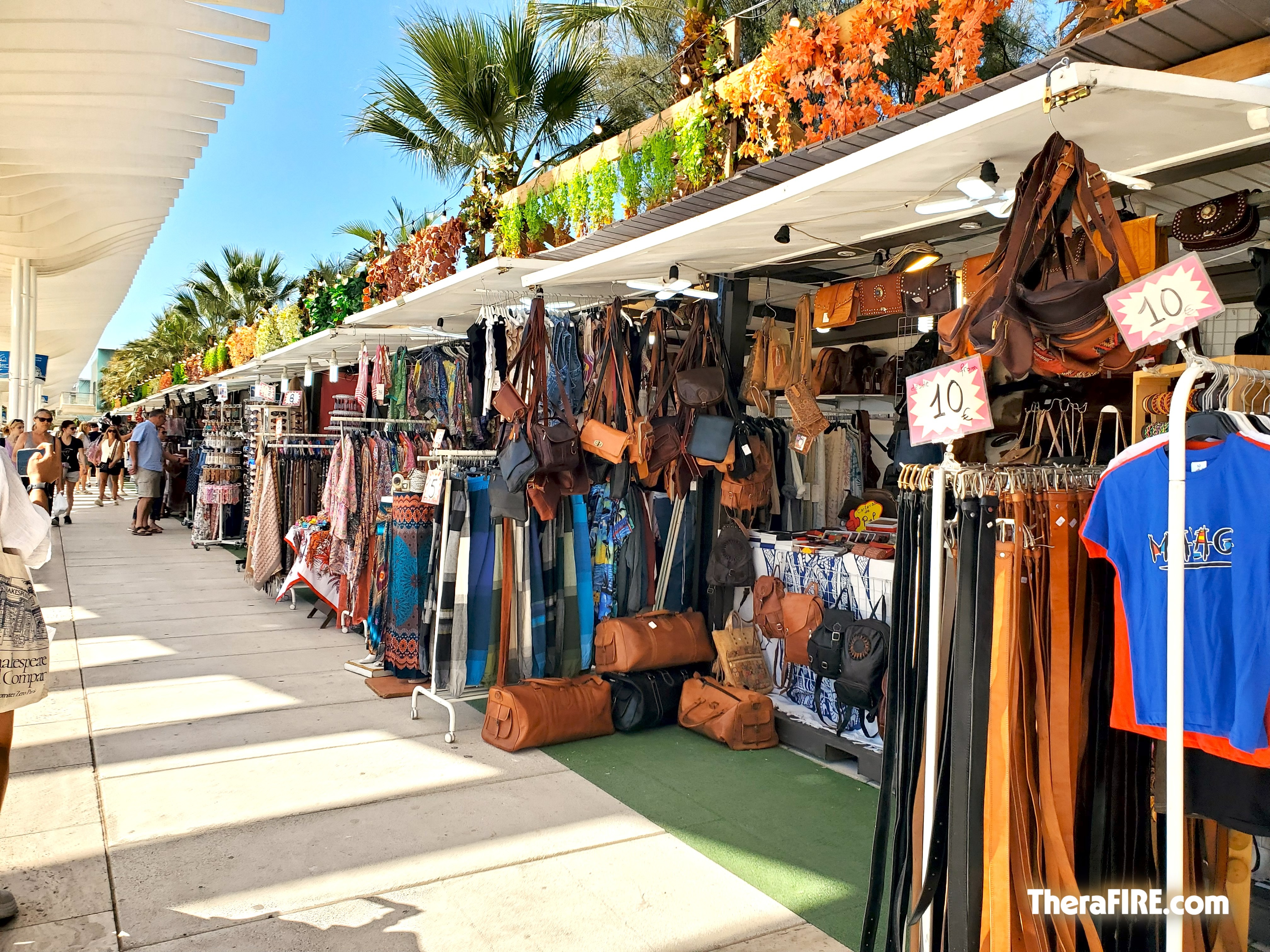
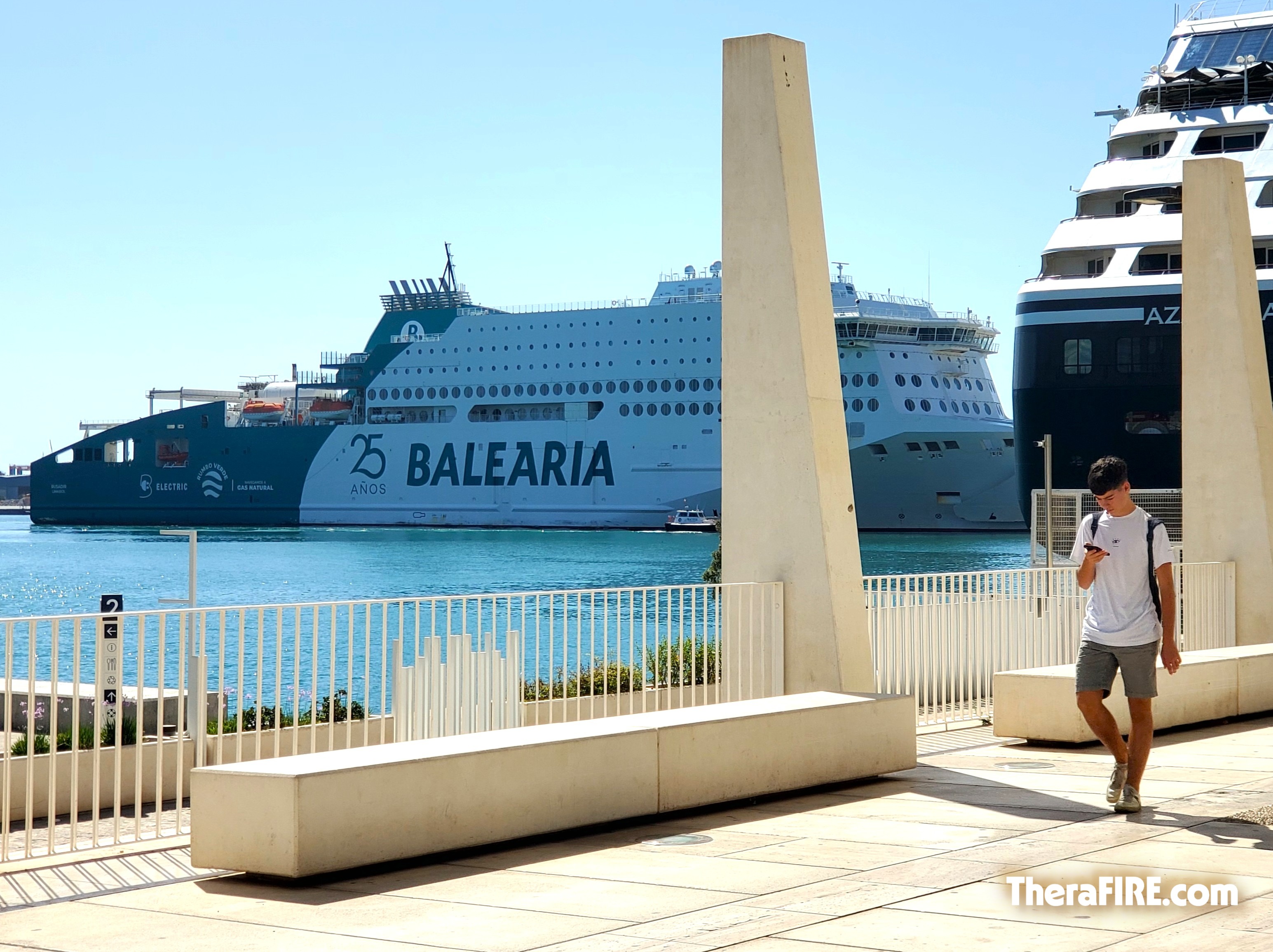
The Palmeral de Las Sorpresas is a distinctive and modern urban space located along the waterfront of Málaga’s port as part of the larger Muelle Uno development. The design is notable for its innovative use of white pergolas. As its name suggests, it features a lush palm grove, offering a refreshing green space by the sea. When cruise ships port at Málaga, the waterfront souvenir stalls become inundated with tourists that consequently spill over Málaga’s historic center.
Just a stone’s throw from the port, we found ourselves sinking our toes into the golden sands of Playa La Malagueta. This urban beach is incredibly close, allowing you to go from historical sightseeing to lounging on the sand in minutes. Beyond relaxation, the beach is often a hub of activity, with locals playing beach volleyball or taking part in a variety of water sports.
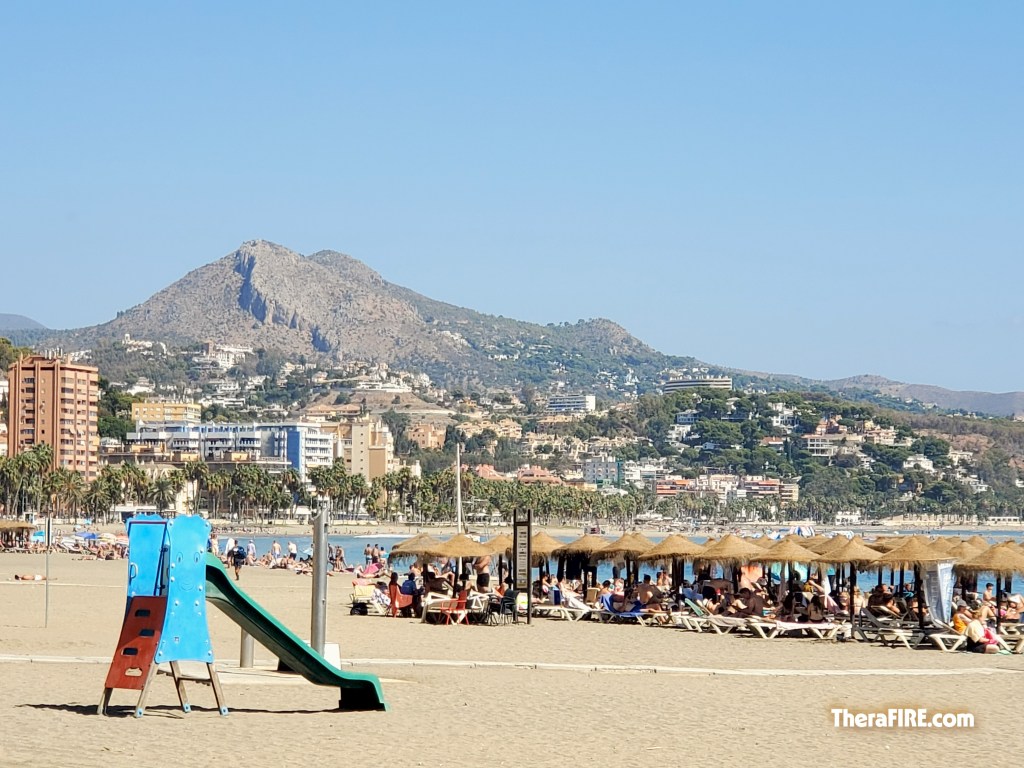
La Malagueta is well equipped with amenities for a comfortable beach day. You’ll find sunbeds and umbrellas for rent, showers, public toilets, and children’s play areas. The promenade running along the beach is lined with numerous chiringuitos (beach bars and restaurants) that serve fresh seafood.
The famous “Malagueta” sculpture, an artistic installation spelling out the beach’s name, is a popular spot for photos. Its vibrant atmosphere and easy accessibility make it a perfect place to enjoy the Mediterranean sun and sea right in the heart of the city.
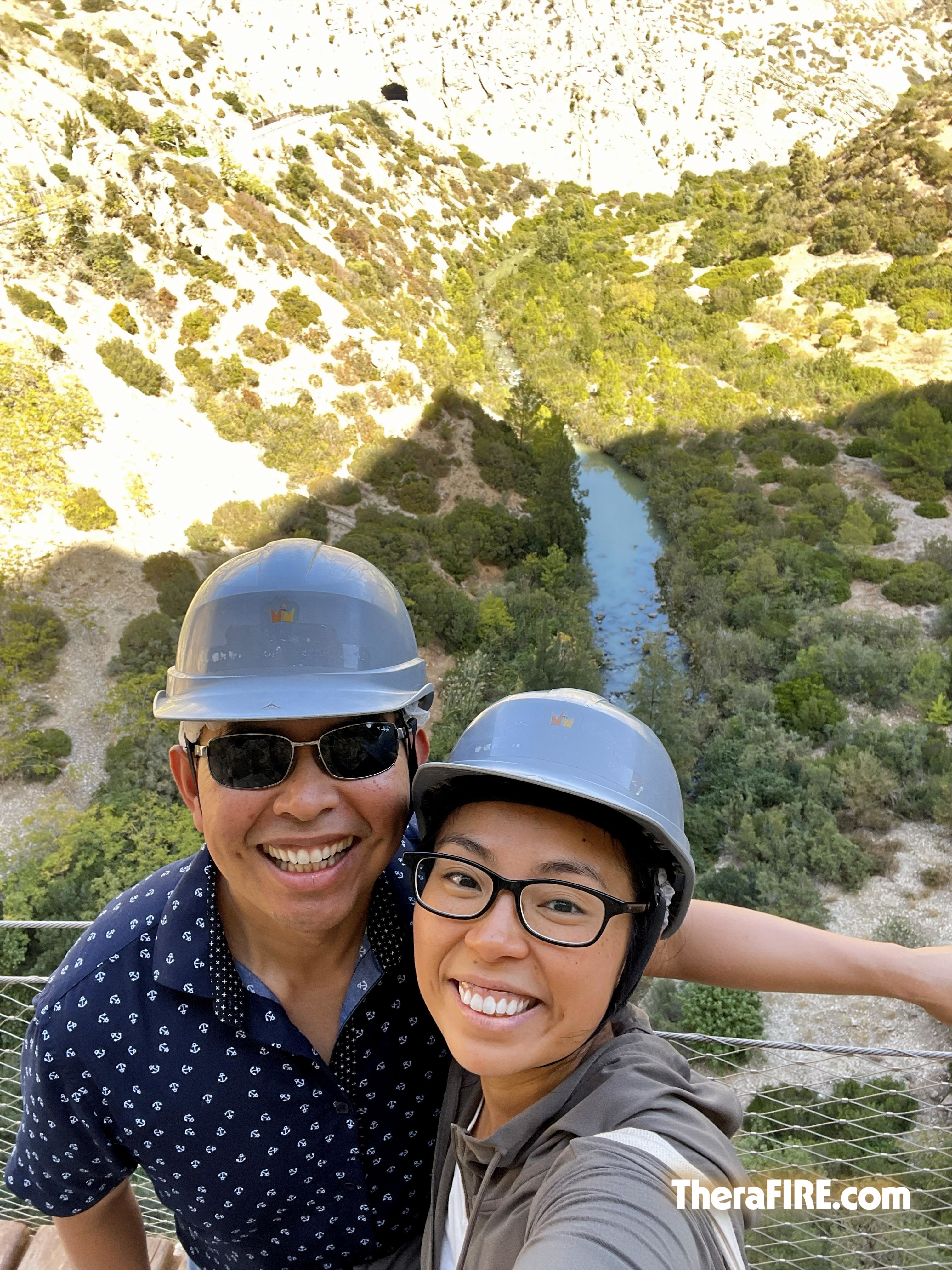
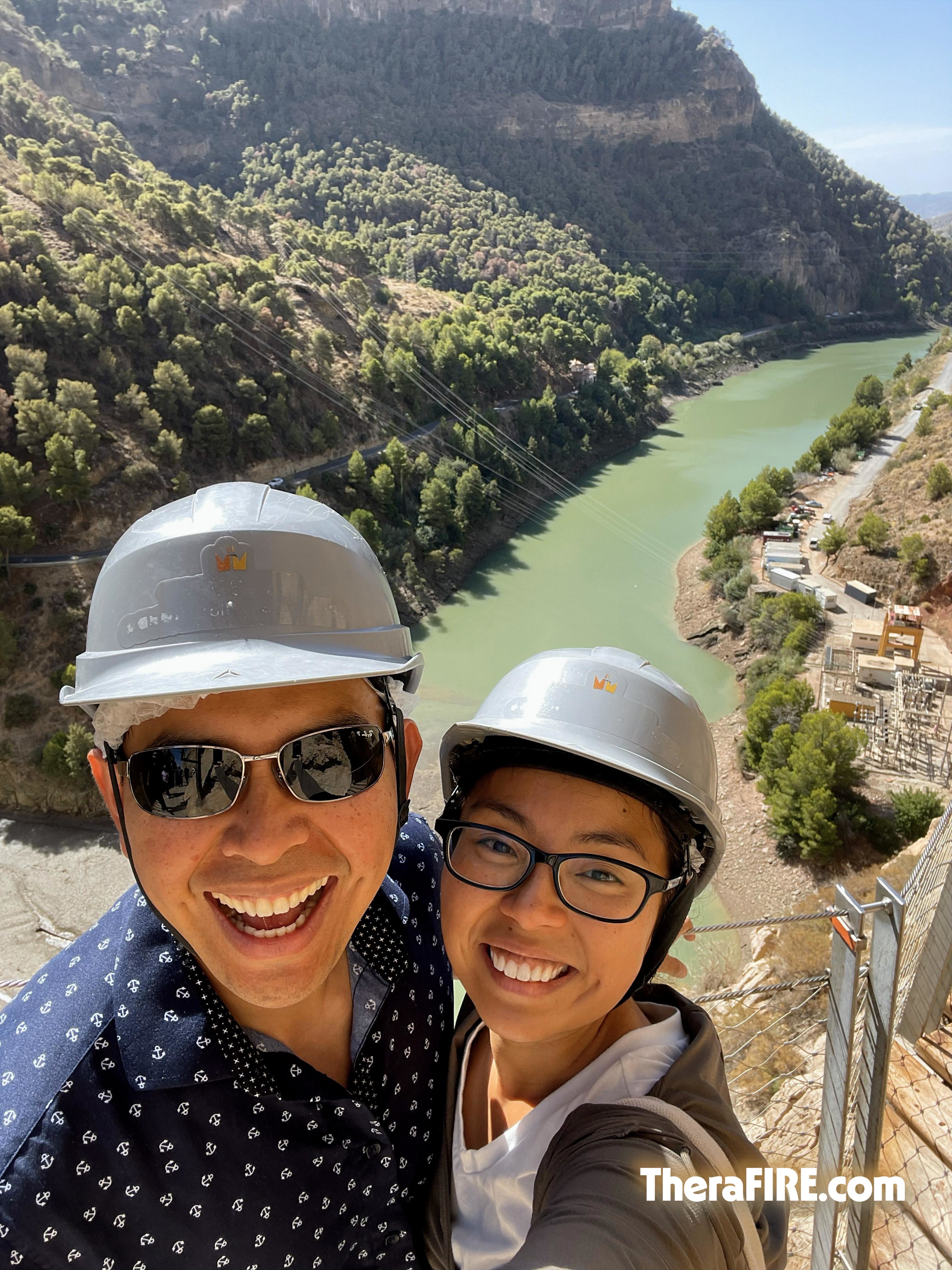
While Málaga’s charm was always inviting, our adventurous spirit led us to one of Andalusia’s most stunning natural sights: the Caminito del Rey. This exciting day trip took us on a walk suspended above the towering canyon gorges, offering spectacular views and a thrilling sense of freedom.
Another beach recommended to us by a local guide is the Playa Pedregalejo. It is a charming and historic beach located to the east of Málaga’s city center. Unlike the central Playa La Malagueta, Playas de Pedregalejo is further from the city center, giving a distinct, more traditional, and authentic local atmosphere. The beach stretches for about three-quarters of a mile (1200 meters) and is characterized by its series of small coves, created by breakwaters that protect the shore, resulting in calm, shallow waters.
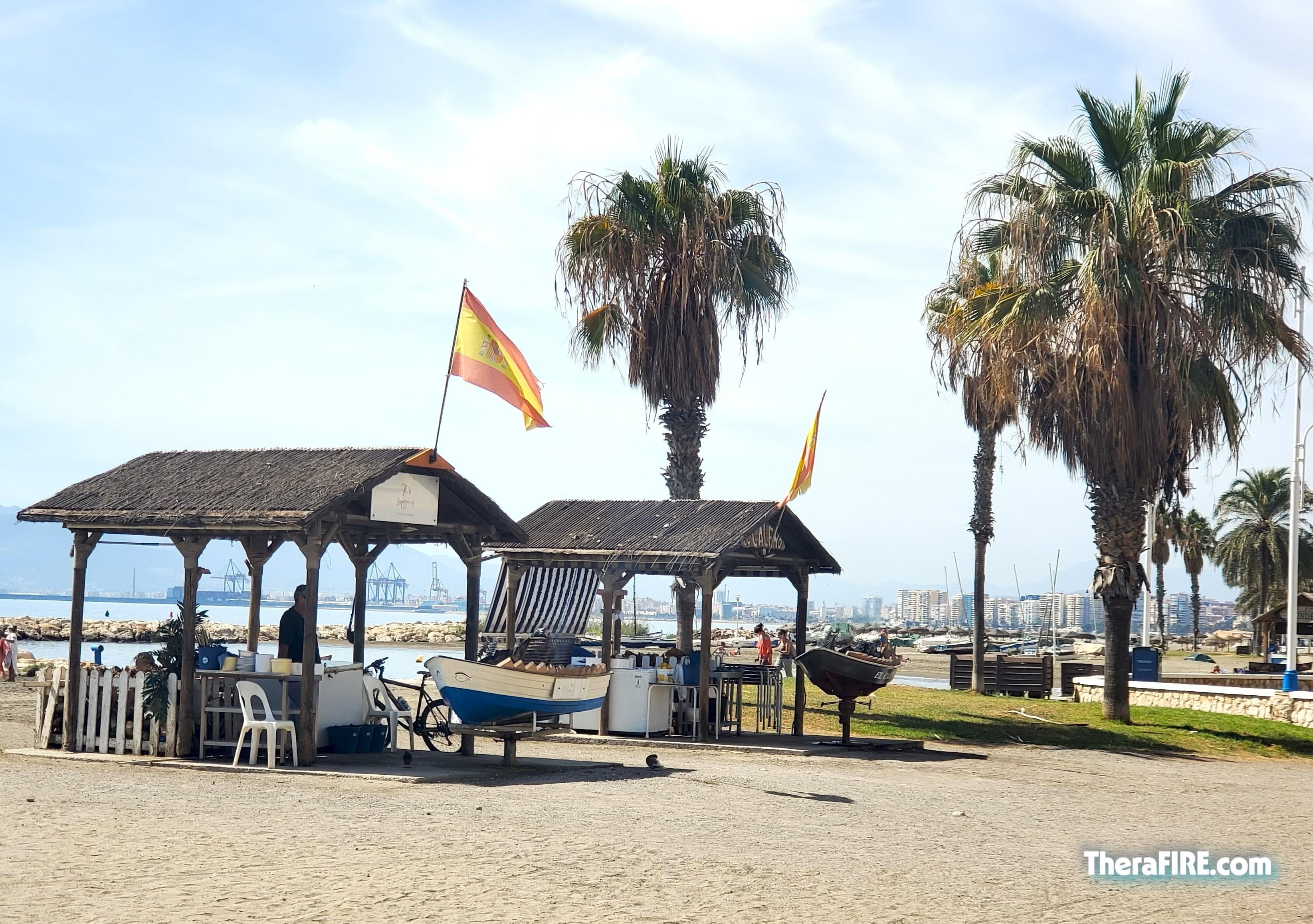
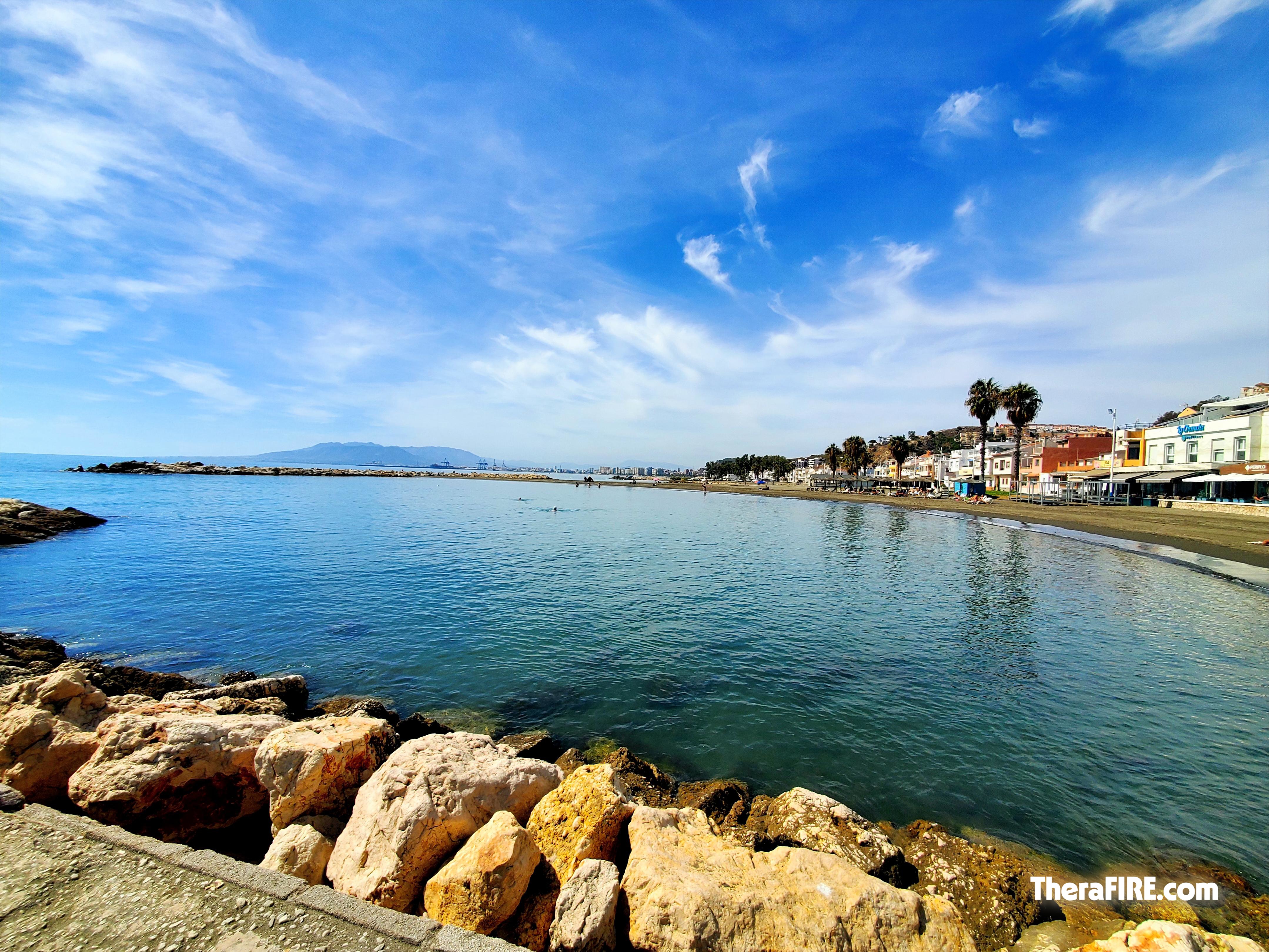
Pedregalejo is renowned for its strong connection to Málaga’s fishing heritage. The promenade along the beach is filled with numerous chiringuitos where you can savor one of Málaga’s culinary delights: espetos de sardinas. These sardine skewers are traditionally cooked over open fires in old fishing boats filled with sand, right on the beach, creating a tempting smoky aroma.
The area has a relaxed and slightly less touristy vibe than the city center, attracting a mix of visitors looking for an authentic experience. You can ride buses number 3, 8, or 11 from the main road at the Alameda to reach Playa Pedregalejo in about 20 minutes. We got off at the wrong stop, so follow this link for the exact location.

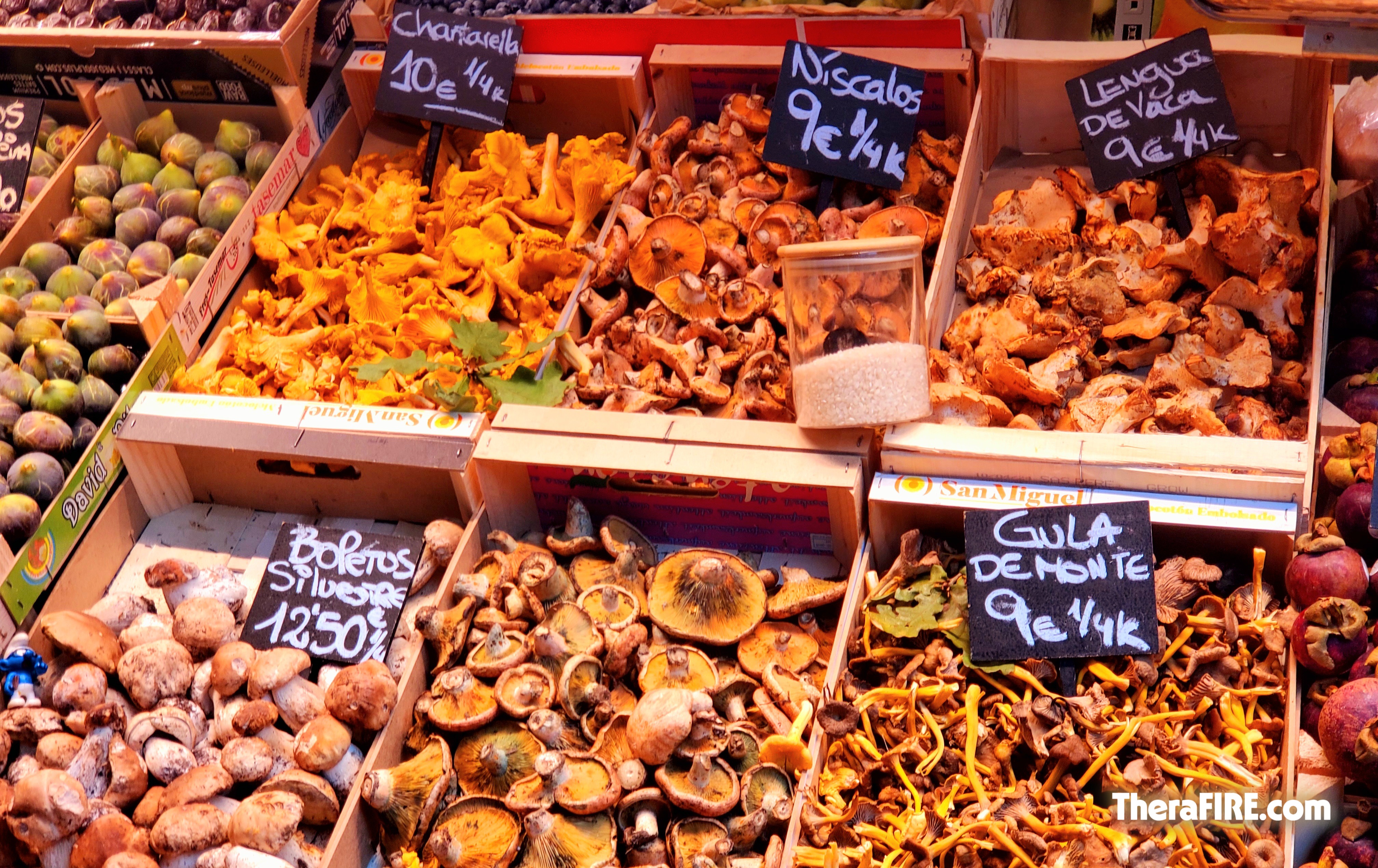
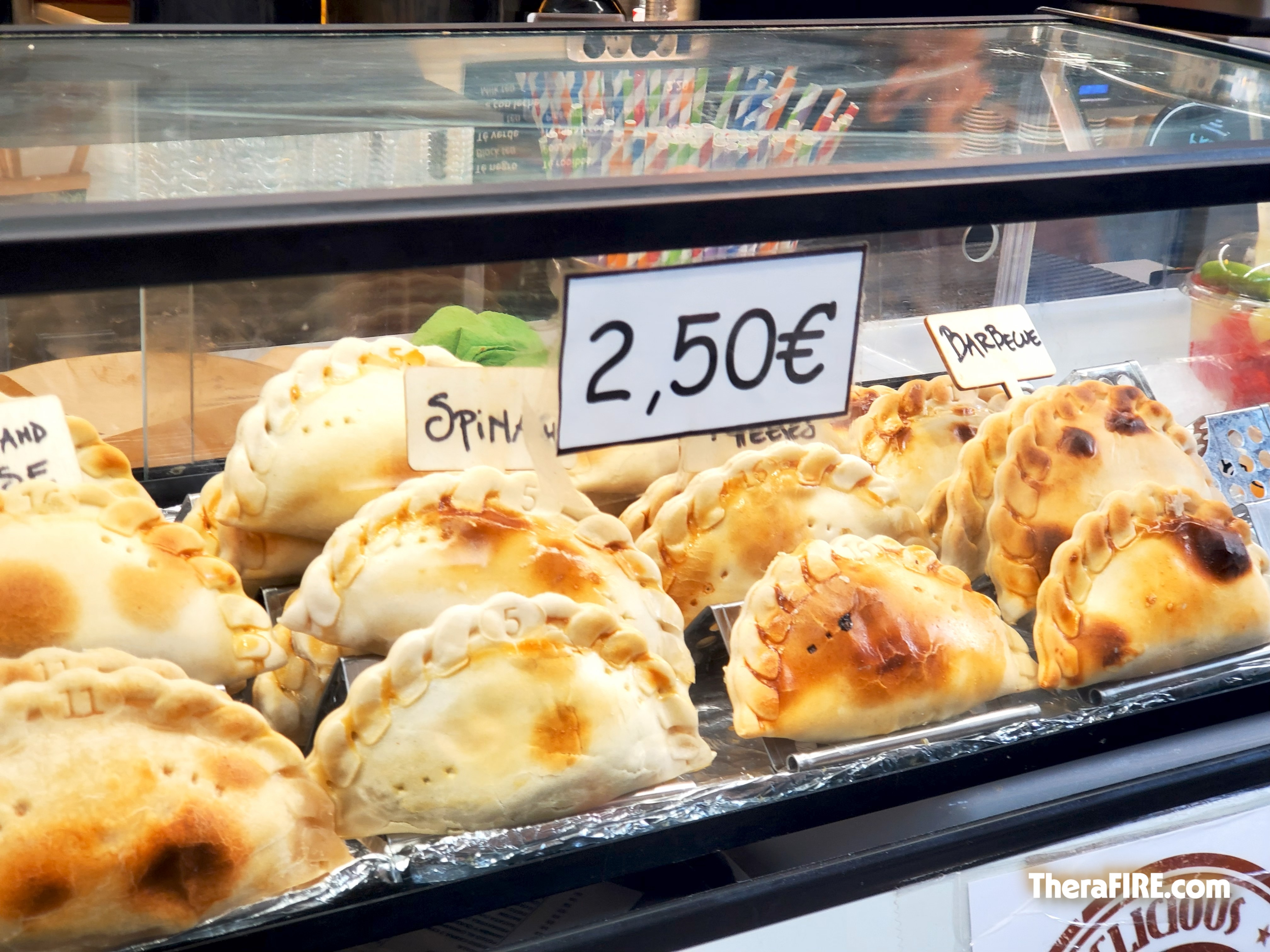
One of our favorite stops in Malaga was the Mercado Central de Atarazanas. A magnificent iron structure built on the site of a former Nasrid shipyard. It has a stunning stained-glass window depicting Málaga’s history. Inside, a sensory explosion of vibrant colors of fresh produce, the tantalizing aromas of spices, the lively chatter of vendors, and the freshest seafood in town. It’s the perfect place to grab a budget-friendly lunch while wandering through Malaga’s winding streets or right before an exciting day trip. Generally, the market opens between 8:00 AM and 9:00 AM and closes between 2:00 PM and 3:00 PM. The market is closed on Sundays.
Our Spanish conquest also included a mesmerizing overnight stay in Seville. From the sheer scale of the Seville Cathedral to the romantic charm of its historic landmarks, Seville is a place that truly pulses with life. For all our tips on how to make the most of an overnight trip to this incredible city, be sure to read our full article!
As we prepared to leave for the next leg of our European adventure, Málaga, a city of undeniable charm and enduring warmth, lingered in our memories. We recalled the taste of freshly prepared tapas, the towers of beautiful cathedrals, and the pure joy of watching life unfold in three Andalusian towns. Our 10-night venture in Spain cost us about $2500. We were at the halfway mark of our first visit to Europe, and we managed to make the most of our time while staying on budget so far. Hope to see you at our next destination!
References:
https://andalucia.com/cities/malaga/home.htm
https://www.disfrutamalaga.com/monumentos-atracciones
https://malagapedia.wikanda.es/wiki/Portada
Trial Retirements are periods we dedicate to traveling to beautiful countries to know if they are perfect for us when we eventually retire. The time spent outside work will preview our habits and behaviors when we reach Financial Independence and, of course, our way to recharge after months of hard work.
Anything we missed? Questions? Violent reactions? Let us know in the comments below!
Check out our trial retirements in Mexico, Costa Rica, and Peru! You can also follow our week-long adventures in Paris and Porto. Subscribe and follow TheraFIRE on our social media!

